Betting on UFC Champions vs Challengers
 Available in US
Why I bet more cautiously on title fights than on main cards
Title fights are strange bets. The coupon looks cleaner — two proven fighters, twenty-five minutes of scheduled action, nothing speculative about either corner’s credentials — and yet I lose more of my title-fight bets than my Fight Night bets on a percentage basis. The reason, I think, is that title fights are where the market is most efficient. The champion has a long tape, the challenger has earned the shot through a clear path, and everyone watching has a view. When a market is that well-scouted by the public, the edges shrink and the margin still takes its share.
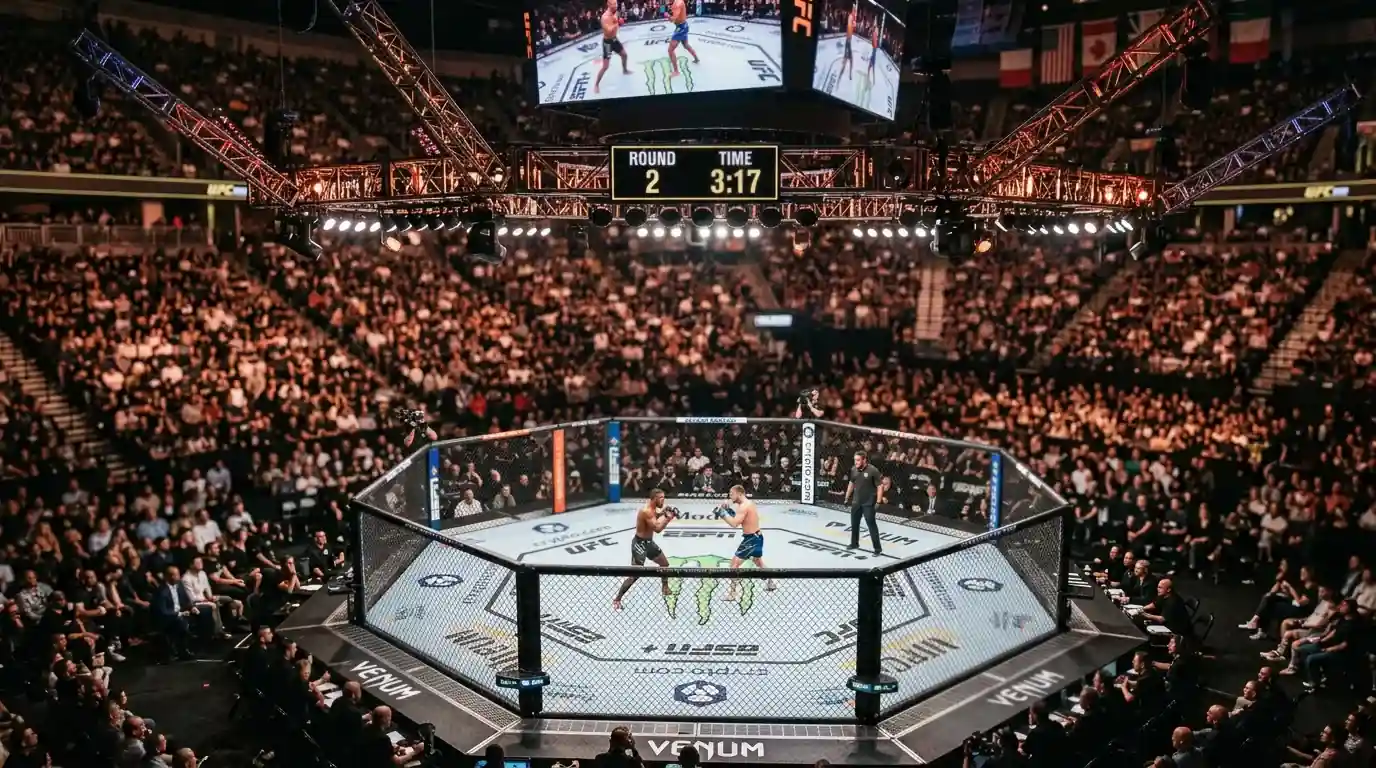
A UFC title fight is scheduled for five five-minute rounds rather than the three-rounder format of most non-headline bouts. Both fighters have typically earned the matchup through a ranked resume rather than a fortunate matchup pick. The moneyline is usually respected early by the market and carries sharper pricing than a random Fight Night main event. Everything about the structure pushes the book towards careful lines.
What I want to work through is how UFC title fights get priced, why underdog champions are more durable than the market sometimes suggests, what five-round distance dynamics do to the fight pattern, and how interim titles muddy the picture in ways worth factoring in before you stake.
How UFC title fight pricing is set
Title fight pricing starts from a base of the champion’s demonstrated retention rate plus the challenger’s ranking and path-to-the-fight credentials. UK books look at the champion’s previous title defences, their method-of-victory distribution, the stylistic matchup, and the challenger’s wins against ranked opposition. These factors get weighted and turned into a moneyline that sits in one of three typical bands.
Heavy champion favourite — 1/4 or shorter. Usually applied to champions with multiple successful defences against a challenger ranked outside the top three. Implied probability 80 per cent or higher. Historically these matchups produce champion wins at about the implied rate; the book prices them correctly.
Standard champion favourite — 1/2 to 4/9. Applied to champions with one or two recent defences against ranked challengers. Implied probability 65 to 75 per cent. This is where most title fights end up priced.
Pick’em or slight-favourite title fights — 5/6 to 8/11 each way. Applied to new champions against elite challengers, or to rematches between two top-tier fighters. The market views the fight as genuinely uncertain, and the margin gets squeezed to a minimum.
The structural feature of title fight pricing is that the book trusts its own model more than it does on non-title fights, because both fighters have deeper resumes to draw on. UFC favourites priced in the very short band (-400 to -900, or 1/4 to 1/9 in fractions) win 88 to 93 per cent of the time across the historical data, which is a sobering number for any punter hoping to back challenger upsets at the very top of the card. Short-price champions are usually priced correctly because the data supports the price.
Underdog champion retention and why it matters
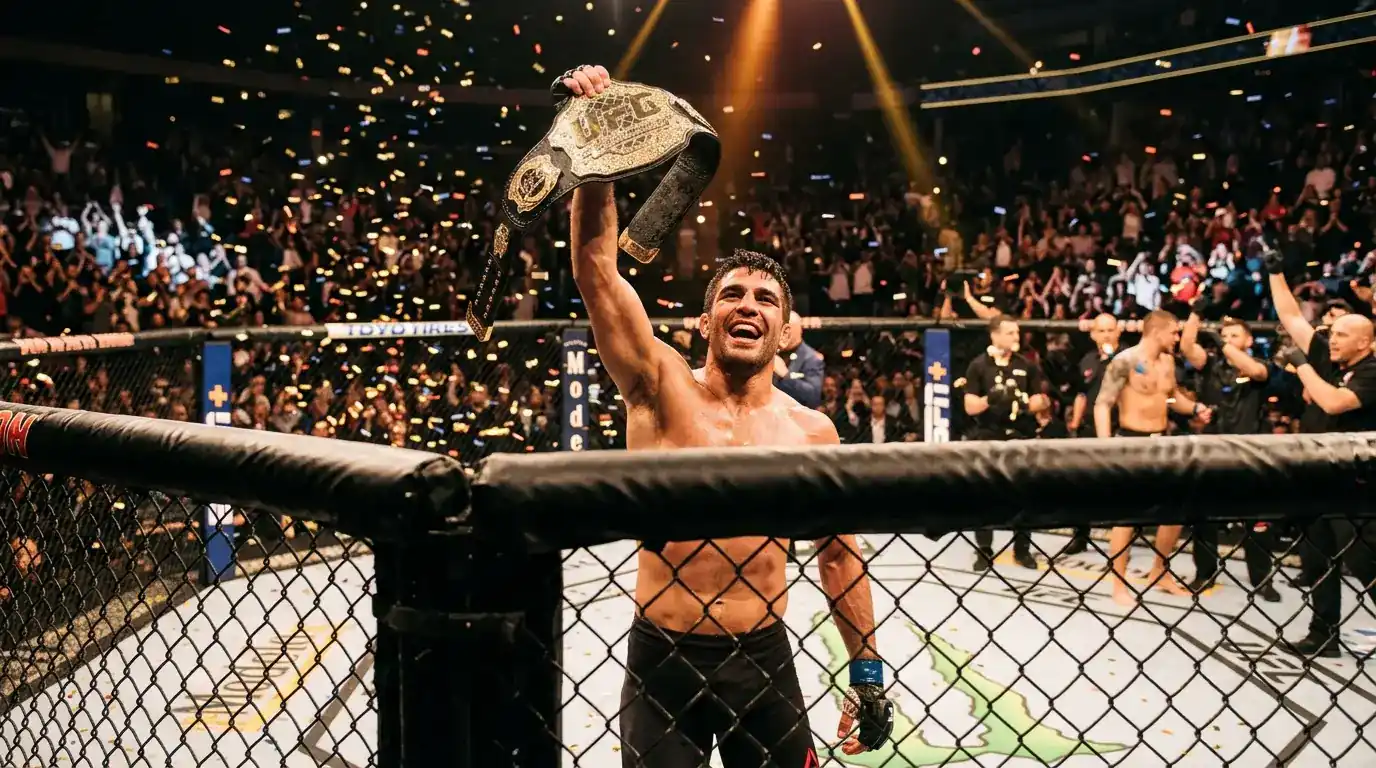
An interesting wrinkle in the title-fight data. When a fighter wins the UFC belt as an underdog — meaning they entered the title fight priced longer than the then-champion — they tend to defend the belt at a surprisingly high rate. Across the 19 instances in UFC history where an underdog became champion, 12 successfully defended the belt at least once. That is 63 per cent, which is above the typical implied probability on first-defence favourites.
The reasons for this are structural rather than mystical. An underdog who beat the champion to win the belt usually did so because their stylistic matchup was genuinely better than the market had priced. When the next challenger shows up, that underlying stylistic fit does not necessarily disappear — the same fighter who beat one champion with a specific approach can often beat a different challenger with the same approach. The market takes a while to reprice this. The new champion is priced based on the narrow sample of their title win rather than on the deeper pattern of how they fight.
Practical consequence. On first-defence title fights where the champion is a recent underdog winner, the market often prices them as a slight favourite or even a pick’em, while the historical data suggests they should be 60 to 65 per cent likely to retain. That is value — not huge, but real — for a patient punter willing to back incumbents against the narrative flow.
The caveat: this only applies to first defences. By the second or third defence, the market has enough data on the new champion’s title reign to price them accurately. The value window closes once the new champion has demonstrated either durability or vulnerability at the top of the division.
Five-round distance dynamics
Title fights run five rounds instead of three, and the extra ten minutes of action reshape almost every secondary market on the coupon. Round betting, totals, method of victory — all of them behave differently on a five-rounder than on a three-rounder, and the pricing reflects this.
The distance line on a title fight is frequently the shortest single selection on the fight coupon. When two well-conditioned championship-level fighters are scheduled for twenty-five minutes, the fight going the distance is often implied at 55 to 65 per cent probability, with the corresponding individual-round finish prices drifting longer than they would on a three-rounder. A round-1 finish might price at 6/1 or 7/1 on a title fight where it would be 4/1 on a three-rounder between the same fighters, simply because the twenty-five-minute structure makes finishes harder in any specific round.
The cardio dynamic is the other key factor. A five-round fight tests conditioning in a way three-round fights cannot. Fighters who have never fought past fifteen minutes — which includes many first-time title challengers — are genuinely unknown quantities in rounds four and five. The market knows this and prices the later rounds with some uncertainty, but it cannot price it perfectly. Underdog challengers who gas badly in round four are a recurring pattern in UFC title fights, and the favourite’s live price usually shortens dramatically around the round three to round four transition.
Method of victory shifts too. Late TKOs from accumulated damage — where the referee stops the fight in round four or round five because of absorbed strikes over twenty-plus minutes — are more common in title fights than the casual viewer expects. The pricing on “champion to win by KO/TKO” often undervalues these late stoppages because the casual mental model treats KO finishes as dramatic early moments rather than gradual accumulation.
Interim and vacant title complications
Interim titles are a UFC oddity. They exist when the real champion is injured or inactive long enough that the division needs a top-contender fight with belt stakes, even though the actual belt remains with the absent champion. When the real champion returns, the interim holder typically meets them in a unification fight.
For betting purposes, interim title fights should generally be treated the same as real title fights in terms of pricing logic — both fighters are top-contender level, both have prepared for a five-round championship distance, and the stylistic matchup is usually a clean top-of-the-division contest. The market recognises this and prices interim title fights similarly to undisputed ones.
Where interim titles complicate things is in futures markets and in the narrative around unification rematches. A champion returning from layoff to face an interim holder is priced by the market based on a mix of the returning champion’s prior form (possibly a year or more old), the interim holder’s recent victories (fresh form but against a narrower field), and layoff concerns for the returning champion. The price often sits at or near pick’em, because the market genuinely cannot decide between recent form and demonstrated excellence.
Vacant title fights — where no champion exists and two contenders fight for the belt — are a different pricing problem. Without an incumbent, the matchup is priced purely on the two fighters’ individual merits, usually landing close to pick’em because any two top-contender fighters with no title lineage between them are genuinely hard to separate. These fights are probably the most volatile title pricing category, because the book has no incumbent anchor to build around.
How I approach title fights on the coupon
My defaults. I look for value on the champion side of recent underdog-champion scenarios — specifically the first defence, where the market has not yet repriced the new champion’s underlying stylistic fit. I avoid short-price champion bets at 1/4 or shorter on principle, because the maths does not pay well enough to be worth the risk even at the correct win rate. I do not back five-round distance finishes above a specific odds floor unless I have a very clear pattern read, because the structural tendency is towards later or no-finish outcomes.
What I bet more often on title fights is the “favourite by decision” market, because title fights go the distance more often than three-rounders and because the champion’s cardio and experience advantages compound over twenty-five minutes. Paying a slightly shorter price than the moneyline by adding “by decision” is frequently the cleanest way to back a conservative title pick.
What I try not to do is get suckered by challenger narratives. Every UFC title fight has a build-up story — the challenger has been waiting years, the champion has been looking vulnerable, the rematch dynamic — and those stories are marketing, not signals. The fight tape is the signal. For the wider framing on how title fights fit with underdog strategy, rematch patterns and bankroll management, the UK betting strategy handbook has the full picture.
How often does an underdog UFC champion keep the belt?
63 per cent of the time on their first defence — 12 of the 19 historical underdog champions successfully defended at least once. The rate is higher than the typical implied probability on first-defence title fights, which means underdog champions are frequently undervalued in their first title defence. The edge narrows in subsequent defences as the market accumulates data on the new champion.
Does the five-round format really benefit the more cardio-heavy fighter?
Yes, and the effect compounds through rounds four and five. Fighters who have never fought past fifteen minutes are genuinely unknown quantities in championship-distance scenarios, and underdog challengers who gas badly in round four are a recurring pattern in UFC title fights. The favourite’s live price frequently shortens dramatically around the round three to round four transition as the cardio gap becomes visible.
Should I treat an interim title fight the same as an undisputed one?
For moneyline pricing purposes, roughly yes — the matchup, preparation and stylistic logic are essentially the same at the top of the division. Where interim titles complicate things is in the unification rematch scenario, where a returning champion with older form meets an interim holder with fresher form. Those unification fights often price close to pick’em and are genuinely hard to call, so approach them with more caution than a standard champion-versus-ranked-challenger matchup.
Written by the editors at Best Place to bet on ufc.