UFC Betting Strategy for UK Punters: Data, Styles and Bankroll
 Available in US
Table of Contents
- Strategy, not superstition, over a long year of UFC cards
- Underdog maths: why 32 percent changes how you bet
- Favourite pricing: when the public bias becomes your edge
- Rematches: the pattern that repeats 66 percent of the time
- Underdog champions: the 63 percent retention nobody prices correctly
- Style matchups: the edge that doesn’t show up in a tale of the tape
- Closing line value: the only long-run scorecard worth keeping
- Bankroll and staking: the boring half that decides everything
- When skipping a card is the strategic move
- Strategy questions I hear after every card

Strategy, not superstition, over a long year of UFC cards
Most of what passes for UFC betting strategy online is either pick-sharing dressed up as analysis or generic bankroll advice rebadged for combat sports. The stuff that actually moves your long-run results is different and less romantic. It’s knowing that UFC underdogs cash roughly 30 to 35 percent of the time over recent seasons, that the rare 30 percent isn’t spread evenly across weight classes or card positions, and that picking the right spot for an underdog bet matters more than picking the right underdog. It’s flat staking that fits your roll, rematch-reading that doesn’t get seduced by narrative, and a closing-line-value habit you actually keep.
I’ve been betting UFC since the days when prices moved by the telephone and line shops meant walking to three different high-street bookies on a Saturday. My strategy has changed across that stretch less than people expect — the underlying maths hasn’t moved, just the tools for applying it. This guide is the framework I actually use, aimed at UK punters with ordinary bankrolls who want an approach that survives a bad card, a long variance stretch, and the occasional card you should never have bet on. If you want the market-mechanics side of it — what each bet type actually means and how it settles — that’s in the UFC markets handbook. Here the focus is decision-making.
Underdog maths: why 32 percent changes how you bet
A friend asked me once why I back so many UFC underdogs if I say I’m a disciplined bettor. The answer is that the discipline is precisely why. UFC underdogs, defined as the longer-priced side in any two-way fight, have cashed at roughly 32 percent across 2023 and 2024, with some data sources placing the long-run rate closer to 35 percent. That’s a sharply higher hit rate than casual punters assume — they tend to expect something in the 15 to 20 percent range because highlight reels favour short-priced favourites smashing overmatched opposition.
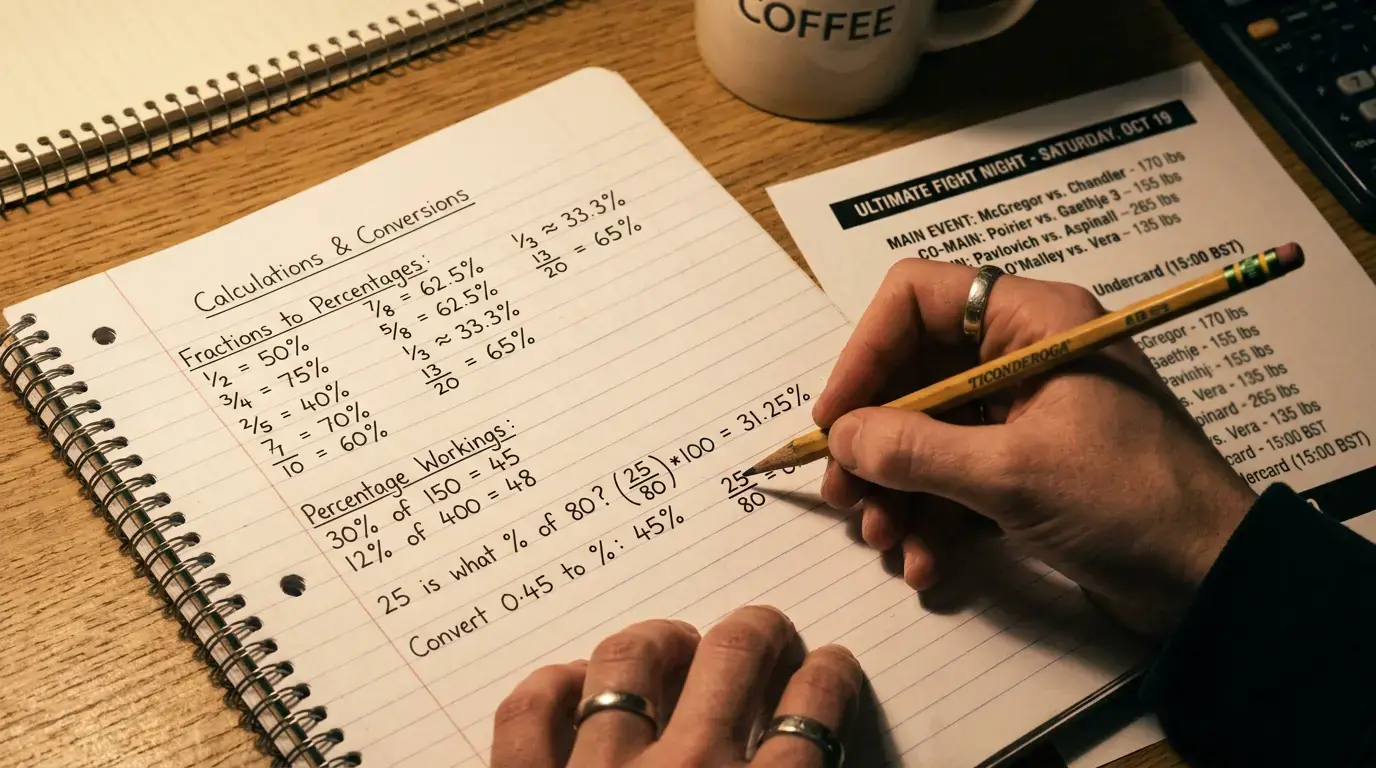
The break-even maths on underdogs is what makes the hit rate matter. At a decimal price of 3.00 (2/1 fractional), a bet needs to win 33.3 percent of the time to break even. At 2.50, you need 40 percent. At 2.00, you need 50 percent. Plot UFC underdog hit rates against the prices they’re typically offered at, and you find the sweet spot sits in the 2.20 to 3.50 decimal window. Underdogs in that price band hit often enough that flat staking across them historically produces positive expected value — small, noisy, but positive.
What that doesn’t mean is “back every underdog”. Underdogs priced beyond 5.00 or 6.00 cash much less often than the break-even implied probability requires. Huge-price dogs — 8/1 and longer — have genuine win rates closer to 8 to 12 percent, which is below what the implied probability pays even at those long odds. You’re buying lottery tickets when you back them, and the lottery pays below fair.
The opposite end of the spectrum is equally informative. UFC favourites priced between -400 and -900 in American (roughly 1.11 to 1.25 decimal, or 1/9 to 1/4 fractional) have historically won between 88 and 93 percent of the time since 2013. Sounds like easy money — it isn’t. At 1.20, a favourite needs to win 83 percent for break-even. At 1.11, break-even is 90 percent. You’re making paper-thin profit on the wins and absorbing the full loss on the rare upset. A single 1/9 favourite losing destroys the profit of the previous seven or eight who won. I bet these markets only when I’ve got a specific read the price isn’t capturing, and usually not as part of a diversified slate.
The practical takeaway is to spend your bankroll preferentially in the 2.20 to 3.50 decimal band on underdogs, and only occasionally at the extreme ends. That’s the band where the market is thin enough to be softer, the hit rate is genuinely close to break-even, and the implied probability is high enough that a research edge translates into visible profit across a season. Everywhere else on the curve, you’re paying for certainty or buying lottery tickets.
Favourite pricing: when the public bias becomes your edge
The interesting part of favourite pricing isn’t the short-priced certainty markets. It’s the middle band — favourites between 1.40 and 1.80 decimal (4/6 down to 4/5 fractional), where the public piles on and the book’s margin is frequently absorbed on the wrong side of the price.
Here’s the pattern. UFC favourites between -400 and -900 win 88 to 93 percent. Favourites between -200 and -400 (1.25 to 1.50 decimal) tend to win roughly 70 to 75 percent. Favourites between -150 and -200 (1.50 to 1.67 decimal) win about 62 to 66 percent. Break-even probabilities at those prices are 67 percent (at 1.50) and 60 percent (at 1.67). So the mid-price favourite is genuinely close to fair, and the edge — if you’ve got one — lives in whether the book has priced the specific matchup correctly or has been pushed by public money onto a line that the fighter doesn’t quite deserve.
Public bias is consistent and predictable. Punters overweight fighters with name recognition, recent highlight finishes, and English-language social media presence. They underweight fighters who grind decisions, who fight on prelims, and who don’t speak during post-fight interviews. Those biases push favourite prices shorter than the fighter’s actual win probability deserves — which is exactly the spot where backing the underdog produces value. The mid-price favourite moment you want to avoid is one where the public bias has already been built into the line; the one you want to take is a mid-price favourite who carries none of the narrative but has the stylistic edge nobody’s priced in.
A practical rule I use. If a mid-price favourite’s implied probability (stripped of overround) is within three percent of my own model’s probability, I pass — the edge is too thin to clear variance. If it’s five percent or more above my model’s probability, I don’t bet the favourite, and I look at the opposite side; the price has been pushed too far. If it’s five percent or more below my model, the favourite is a buy.
The trap most people fall into is thinking the short-priced favourite is the safe bet. Variance on short-priced favourites is actually higher in percentage terms because the rare loss wipes out so many wins. Flat staking a set of 1/9 favourites across a year of UFC feels smooth until the third loss of the year hits and the P&L turns red in a single evening.
Rematches: the pattern that repeats 66 percent of the time
UFC rematches carry a surprisingly stable historical signal. Across the full history of the promotion’s rematches, the winner of the first fight wins the second roughly 66 percent of the time — 52 wins against 26 losses on the running tally. That’s a strong enough tendency that pricing the rematch off the first fight’s result is a reasonable starting point for the market, and it’s why UK books usually open the rematch line with the first-fight winner priced as favourite regardless of other factors.
Where the data gets interesting is in the 34 percent where the pattern breaks. The reverses aren’t random — they cluster around specific signals. Camp changes between fights, where the losing fighter from fight one has visibly moved to a new gym, new head coach, or new wrestling partner. Style adaptations where the losing fighter’s team has identified the specific technical hole they lost through and drilled a fix. Injury context, where the winning fighter finished the first fight nursing something that’s since recurred. Weight class shifts, where one fighter has moved divisions between the fights.
My approach to rematches. Start from the 66 percent prior — assume the first-fight winner wins again unless something meaningful has changed. If the losing fighter’s camp and preparation look identical to fight one, I’ll often back the winner again even at shorter odds than the first fight, because the market tends to hold the rematch price slightly loose on the assumption that the first-fight result was partly luck. If there’s a documented camp change plus a clean public tape from the first fight showing a specific, fixable problem, the loser-becomes-winner scenario is where value lives — often at 2.50 or longer on a fighter who has realistic chances around 40 percent.
Trilogy fights break the pattern. The 66 percent statistic applies to first rematches, where adaptation has the most room to work. By the third fight the fighters have seen each other twice, the stylistic adjustments have been stress-tested, and the margin of difference tends to collapse. I treat trilogies as close to true coin flips regardless of how the first two fights went, priced at the book’s current line without much weight given to the 2-0 or 1-1 historical record.
The market tends to misprice “scar tissue” — the idea that a fighter who was badly finished in the first fight carries psychological damage into the rematch. Sometimes it’s real. More often it’s a narrative UK punters pay over the odds for, and the fighter comes out looking exactly like he did before, not broken by the prior loss. Scar-tissue pricing is where I’m most sceptical of the implied probability the market is offering; I want to see actual evidence in recent fights, not a storyline.
Underdog champions: the 63 percent retention nobody prices correctly
UFC history offers a counter-intuitive pattern that’s worth holding onto. When a fighter wins a title as the betting underdog — and it happens more often than people expect, with 19 such cases through the promotion’s history up to this analysis — those underdog champions go on to successfully defend the belt 63 percent of the time (12 successful defences out of 19 first-defence attempts). That’s a notably higher retention rate than the 50 percent you might expect for a fighter the market had priced to lose his title-winning fight.
Why does the pattern hold? A few reasons I’ve thought through over the years. A fighter who wins a title as an underdog is usually winning against public perception rather than against their actual trajectory — the data on them was already strong, but the market hadn’t caught up. The title victory becomes the event that corrects the market’s view, and the first-defence pricing often over-corrects in the other direction. The new champion walks into his first defence carrying the confidence of the win, the camp gets longer and better funded, and the specific weaknesses the challenger will target are well-understood internally.
The practical angle. When an underdog wins a UFC title and the first defence is scheduled, read the challenger’s pricing carefully. If the new champion is priced as a clear underdog in his first defence — say 2.20 or longer against a top-ranked contender — the 63 percent historical prior is telling you the market is still adjusting. That’s the kind of spot where I’ll back the champion at a price the book thinks reflects his lack of credentials.
Exceptions matter. Interim champions — fighters who won an interim belt rather than the undisputed title — don’t benefit from the same retention pattern because the fight before a unification bout is structurally different. Champions who won their title under unusual circumstances (injury to the prior champion, short-notice replacement challengers, poorly-managed matchmaking) also don’t fit the pattern cleanly. Read each case on its merits rather than applying the 63 percent blanket.
Five-round title fights add a separate dynamic. The new champion defending over five rounds has more time to land a decisive finish but also more time to gas out against a younger, fresher challenger. If the underdog champion won his title through attrition and cardio, the five-round defence generally favours his chances of retaining. If he won it through a specific early-round finish that looked like a one-off, the five-round defence raises the upset probability.
Style matchups: the edge that doesn’t show up in a tale of the tape
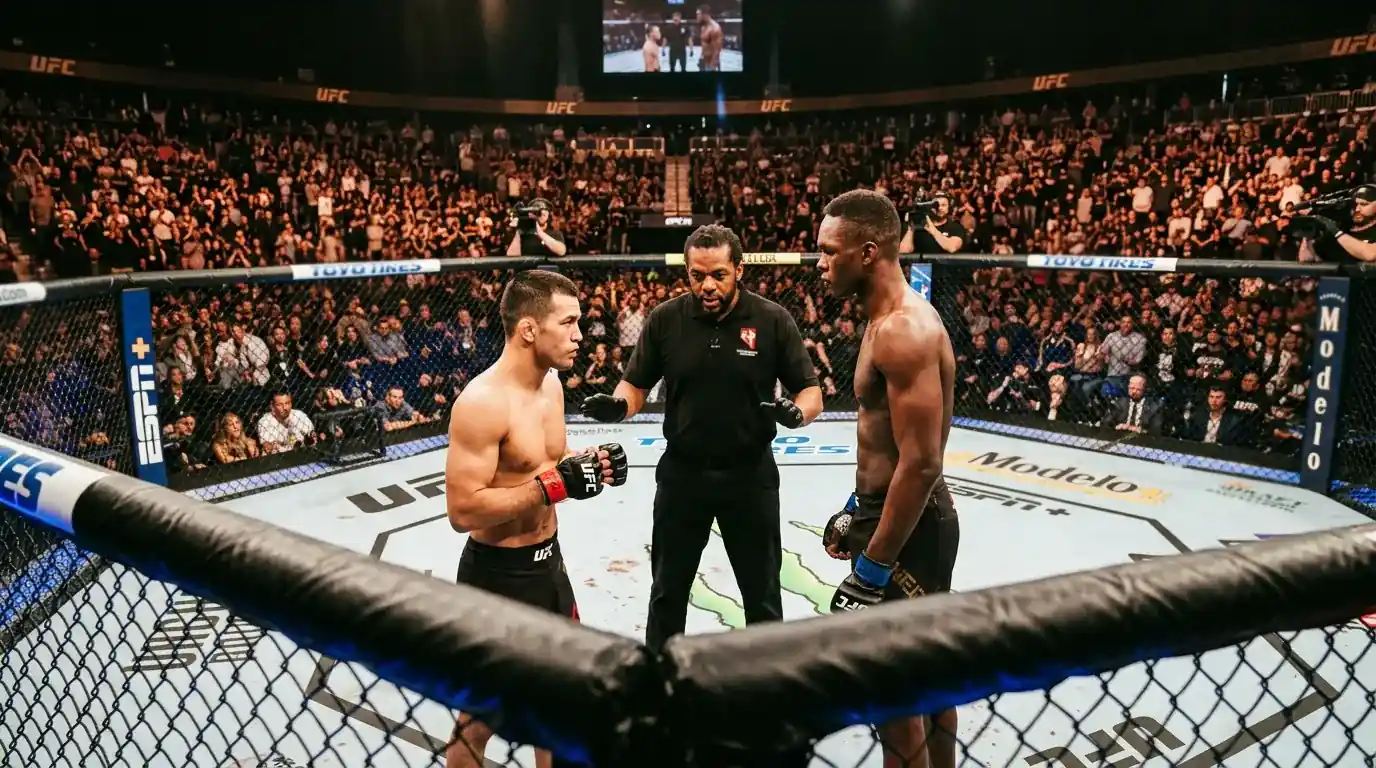
The tale of the tape tells you height, reach, age, stance, and career record. It does not tell you the thing that actually matters: how does this specific stylistic pairing play out under cage conditions? Style matchups are where the bulk of my research time goes on any card, because the public tends to price fights on surface statistics while the outcome is usually determined by a handful of stylistic fits underneath.
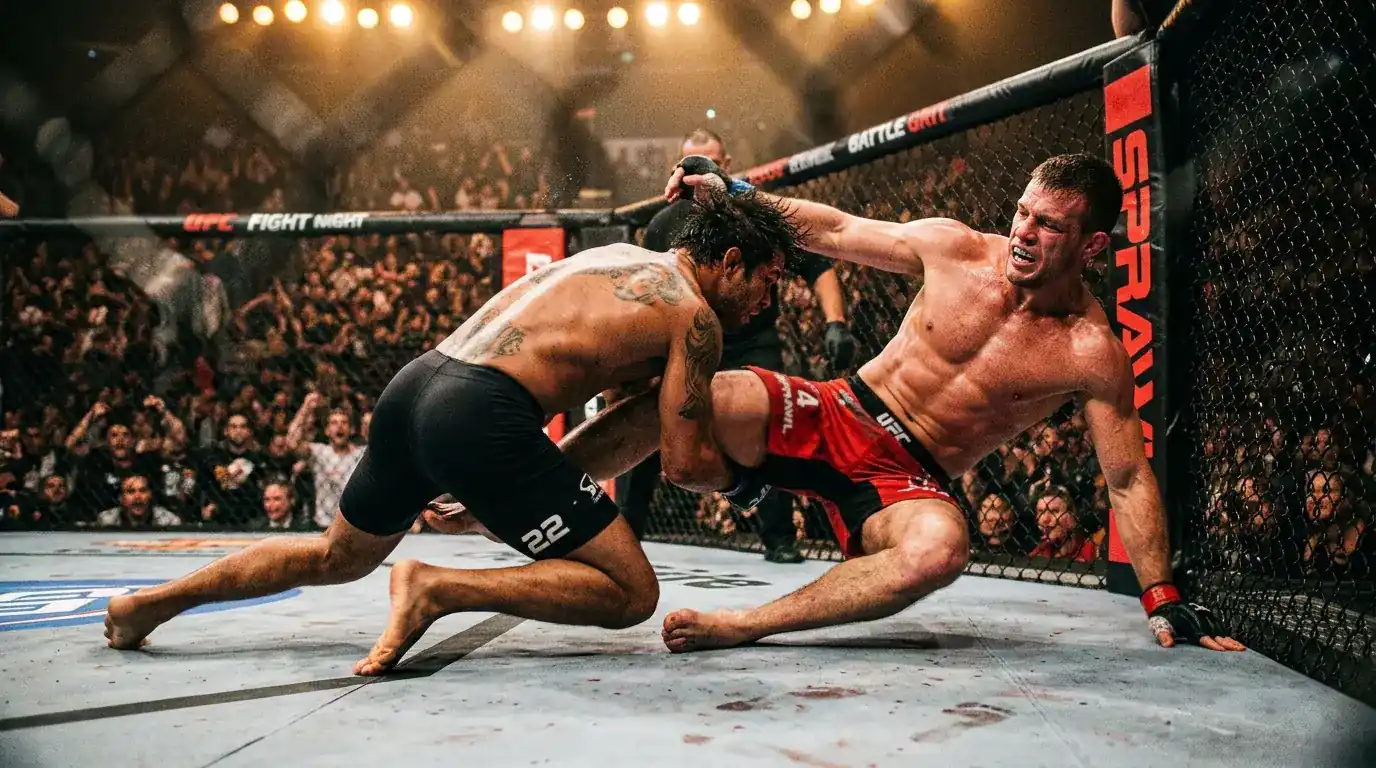
The high-signal matchup pairings I pay closest attention to. Orthodox versus southpaw: stance mismatches open up specific striking angles that pressure strikers exploit and rangy counter-strikers struggle with. A switch-stance fighter who can take either lead has a structural edge over a single-stance opponent because the fight never settles into a rhythm. Reach advantage: three inches of reach in a striker-versus-striker fight materially changes the engagement distance and therefore the damage delivered. Against a grappler, reach matters less because the grappler is closing distance regardless. Pressure versus movement: pressure fighters cut the cage and push the pace; movement fighters reset and counter. A pressure fighter against a tentative counter-striker often wins on output even if he’s taking more damage per engagement, because UFC scoring rewards activity. Wrestling base: a wrestler with 80 percent takedown defence against a striker with a career-long leak in takedown defence is a cleaner edge than the raw moneyline usually suggests.
What I distrust in style analysis. Generic labels — “he’s a jiu-jitsu guy”, “he’s a power puncher” — because they don’t capture the specific technical arsenal. A jiu-jitsu black belt with no wrestling is a different threat from a jiu-jitsu brown belt with Division I wrestling. A power puncher who punches straight is different from a power puncher who punches in wide arcs.
The reach-predicts-finish idea specifically. Reach correlates with finishing rate on strikers, but only when combined with power and confidence in the lead hand. A six-foot-two welterweight who doesn’t use his jab aggressively doesn’t convert reach into finishes at the rate a shorter fighter who commits to his jab does. The tale-of-the-tape reach number tells you nothing about how the fighter uses it.
Weight cuts are the hidden stylistic variable. A fighter who makes weight cleanly on Friday afternoon is going to fight close to his optimum. A fighter who makes weight in the towel with minutes to spare, visibly hollowed out, is going to fight in a degraded state for the first round or two. Weigh-in observations — pace of the walk to the scale, visible skin condition, how long they’re in the sauna late — are unsystematic but useful signals. I watch the weigh-in stream for signs of distress as much as for the actual weight number.
Closing line value: the only long-run scorecard worth keeping
Closing line value is the single most important concept I’d teach a serious UFC punter after the basics of overround. It’s the practice of comparing the price you took to the price the fight closed at, and using the gap as a scorecard for whether you’re genuinely beating the market over time.
The mechanic is simple. You back a fighter at 2.50 on Tuesday. By the time the fight starts on Saturday, that fighter’s closing price across UK books has converged to 2.20. You’ve taken the bet at 2.50 and the market has moved to 2.20 — that means the market, by Saturday, agrees with your direction more than it did on Tuesday. You’ve achieved positive closing line value of roughly 13 percent. Whether the bet wins or loses on the night is almost beside the point for CLV purposes; you’ve demonstrated that your price was better than the market’s final verdict.
Why CLV matters over win-loss records. Across any sample smaller than a few hundred bets, a UFC punter’s win-loss is mostly variance. A bettor placing perfectly fair-value bets at 2.00 who hits 50 percent isn’t statistically distinguishable from one who hits 45 percent or 55 percent over fifty bets — that’s just the range of normal outcomes. Closing line value is a much faster signal. If you consistently beat closing lines by two to four percent across a hundred bets, you’re a profitable punter regardless of what your win-loss column says over that short stretch. If you consistently underperform the closing line, you’re leaking money even when your short-term results look fine.
How to track it. I keep a spreadsheet: fight, price taken, book, closing price on any major UK operator, percentage CLV. Positive CLV is the number you’re trying to average above zero across every hundred-bet block. A season-long positive CLV of three to five percent is strong; ten percent is exceptional and probably unsustainable.
Be honest with yourself about what CLV includes and what it doesn’t. CLV rewards early betting on correct directions; it doesn’t tell you whether the absolute price you took was profitable against the true probability, because the closing line itself isn’t necessarily fair. Closing lines move for information reasons, but also for volume reasons, and for reasons that aren’t always well-founded. The November 2025 Dulgarian–del Valle fight on UFC Vegas 110 is the edge case worth remembering: the closing line there moved from around 1.40 to 1.77 on Dulgarian in the hours before the first bell, and the reason turned out to be integrity-relevant betting activity rather than any information a public punter could ethically act on. Operators ended up refunding losing bets after investigations concluded. The closing line in that case pointed to a distortion nobody should have chased. CLV is a tool for self-measurement, not a pure north star.
Bankroll and staking: the boring half that decides everything
Nobody remembers the bankroll advice because it isn’t exciting, but the punters I know who’ve turned a slow profit on UFC over multi-year stretches are all obsessive about staking. The ones who’ve blown up are universally the ones who let one big fight set the stake size for a year.
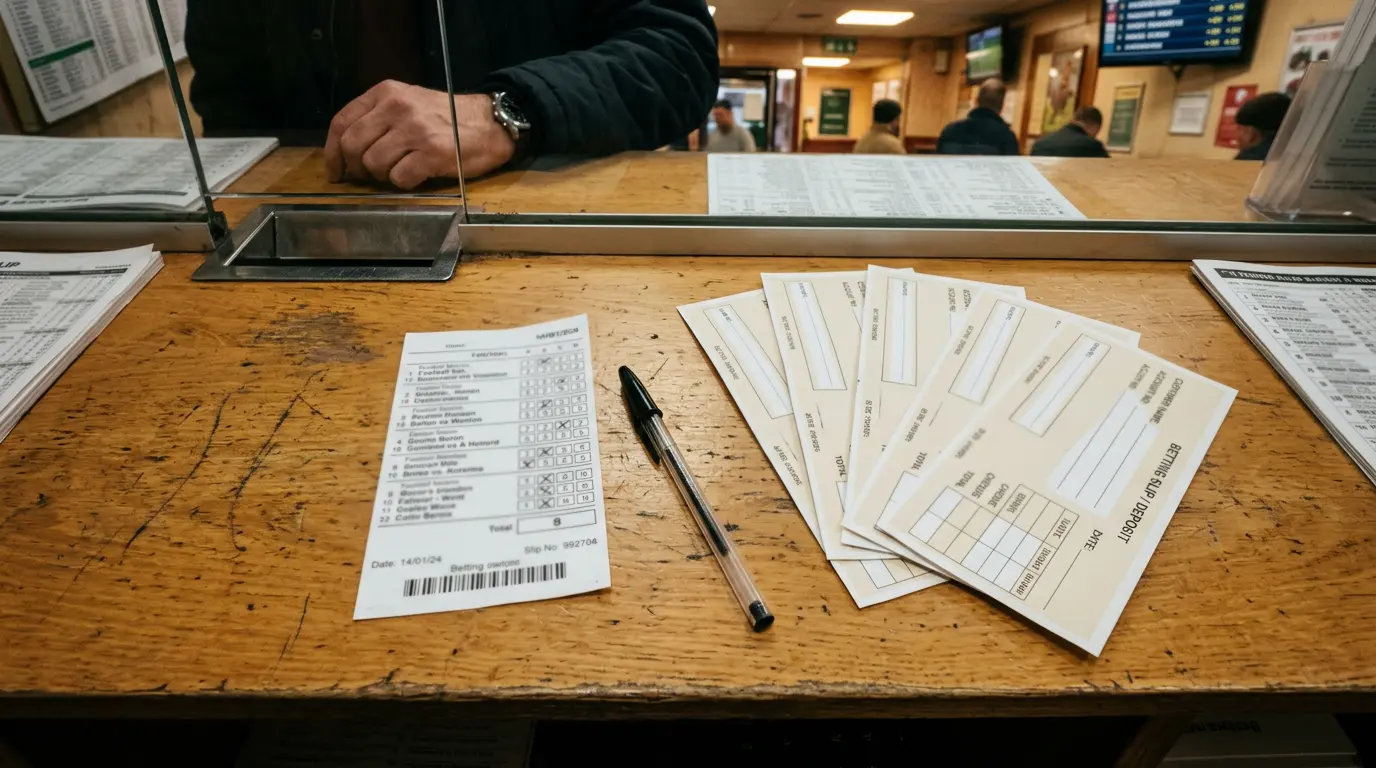
Define the bankroll first. It’s the amount of money you’ve set aside explicitly for UFC betting — not your savings, not your emergency fund, not next month’s rent. If the whole thing vanished tomorrow, your life is unchanged. That sounds obvious. It’s the rule most violated by punters who tell me they’ve got “£5,000 set aside” and then describe a £5,000 figure that includes £3,000 they need for something else. Sort that first.
Unit sizing. The simplest defensible rule is one to two percent of bankroll per bet. On a £1,000 roll, that’s £10 to £20 per bet. On a £5,000 roll, £50 to £100. The reason the range is small: UFC cards can produce losing streaks of five or six bets in a row, even for sharp punters, and variance on underdog-heavy portfolios is brutal. If you’re staking five percent per bet, a six-bet losing streak is 30 percent of your bankroll gone — psychologically and mathematically disruptive. At one to two percent, the same streak is six to twelve percent, recoverable without emotional damage.
Flat staking versus Kelly. Flat staking means the same stake on every bet regardless of perceived edge. Kelly sizing scales the stake with the edge: bigger bets on bigger edges, smaller bets on smaller edges. Full Kelly is mathematically optimal in theory and wildly aggressive in practice, because small errors in edge estimation produce outsized stake variance. I use fractional Kelly — a quarter-Kelly multiplier on my calculated edge — which captures most of the upside while damping the downside. For punters who don’t want to model edges at all, flat staking at one to two percent is a perfectly reasonable lifetime strategy.
Variance budget. Reserve a bad-streak buffer of 20 to 25 percent of your bankroll as the stretch you expect to go through at some point. If a run of bad results takes you into that buffer, you’re in normal variance territory — stay disciplined and don’t change stake size. If it takes you past the buffer to 40 percent drawdown or worse, stop betting for a week, review your picks, and consider whether your process or your bankroll sizing is wrong.
Card-level stop-losses. On every Fight Night and numbered card, I set a stop-loss of three stakes — if I’m down three unit-sizes by the main card, I close the app and watch the rest of the fights for entertainment. The point isn’t to prevent losses mechanically; it’s to stop the tilt-bet at 9pm when a losing card tempts a double-up on the main event. Every punter I know who’s blown up has a version of the same story, and the stop-loss rule would have prevented it.
Reset cadence. If your bankroll grows meaningfully — say by 40 percent or more — you can consider raising unit sizes proportionally. Don’t do it in one jump; stage the increase over several weeks to avoid overreacting to variance. If it drops below 60 percent of your starting roll, reduce unit sizes to match the new reality and rebuild from there.
When skipping a card is the strategic move
The hardest bet to place is no bet at all. Every UFC card feels like it demands a slip, and the financial damage from bad cards almost always comes from bets that shouldn’t have been placed rather than picks that came in second best. Knowing when to skip is a discipline worth practising.
Short-notice replacement fighters are the first category. A main event where one fighter drops out two weeks before and is replaced by someone on short camp is a matchup nobody has priced accurately, including the book. The public overreacts to the replacement, the sharp money is usually waiting for clearer information, and the fight itself often plays out in an unpredictable shape because the new fighter hasn’t prepared for the specific opponent. My default on short-notice replacements is to skip the fight entirely unless I have a specific, researched view the line doesn’t capture.
Weigh-in misses change the calculation too. A fighter missing weight by more than three pounds and looking visibly depleted on the scale is a bet you should think about carefully. The late-round performance of that fighter will often collapse. The opponent is fighting a man who’s spent his Friday in the sauna rather than sharpening his game. Markets usually adjust — the over/under drops, the moneyline moves — but the adjustment is rarely enough. I’ll sometimes back the correctly-weighing opponent on totals (Under) rather than touching the moneyline.
Integrity alerts are the hardest and most important skip category. When you see a pre-fight line move in a shape that doesn’t match weigh-in news, public volume, or any visible storyline — a fast, late, one-way move in the hours before the fight — the appropriate response is to pause, not chase. UFC’s leadership has been aggressive on this front; Dana White has publicly said, in the aftermath of the 2025 Dulgarian case, that the promotion’s first call was to federal law enforcement and that the sport will treat any attempt to manipulate fights as something they’ll go after with the FBI directly. The practical implication for a punter is simple: if the line is behaving in a way that looks like something is wrong, trust that instinct. Skip the fight. You don’t need to be a regulator to recognise that a distorted line isn’t the market telling you something useful — it’s the market being manipulated.
Cards where you’re fatigued or emotional. This sounds squishy and it’s the most important of the four. A punter betting the Saturday card after a bad day at work, a fight with a partner, or a couple of pints too many is betting worse than they think. The self-assessment needs to be honest: if the card doesn’t feel like it would still be a good bet tomorrow morning when you’re clear-headed, it isn’t a good bet tonight. I’ve skipped plenty of full cards over the years on nothing more than an awareness that I wasn’t in the right headspace to price them. None of the skipped cards haunt me.
Strategy questions I hear after every card
Four questions come back in some form after nearly every card I work through with other punters. They cut to the maths that actually decides whether a strategy survives the season.
Yes, across recent seasons the underdog win rate has clustered in that band. But the rate isn’t uniform — underdogs priced between 2.20 and 3.50 decimal hit notably closer to break-even than underdogs priced beyond 5.00, where the implied probability pays less than the actual win rate. The 30 to 35 percent figure is a headline number; the profitable band within it is narrower than the headline suggests. Closing line value is the gap between the price you took and the price the market closed at. If you backed a fighter at 2.50 and the closing line was 2.20, you’ve got positive CLV of roughly 13 percent. Track it in a simple spreadsheet: fight, your price, closing price from a major UK operator, percentage difference. Average across a few hundred bets and you’ve got a cleaner scorecard than win-loss for whether you’re beating the market long-term. For most UK punters, yes. Flat staking at one to two percent of bankroll per bet is low-variance, forgiving of edge-estimation errors, and doesn’t require you to model expected value on every bet. Full Kelly is mathematically optimal only if your edge estimates are genuinely accurate — which most of us overestimate. Fractional Kelly at a quarter-multiplier is a reasonable middle ground for punters confident in their modelling. The long-run rate is about 66 percent — the first-fight winner takes the rematch roughly two times out of three. The 34 percent where the pattern reverses clusters around camp changes, documented stylistic adaptations, and injury context on the winner. Trilogies are closer to true coin flips; the adaptation budget has been mostly spent by the third meeting.Do UFC underdogs really win 30 to 35 percent of the time?
What is ‘closing line value’ and how do I track mine on a UK book?
Is flat staking better than Kelly for a casual UFC bettor?
How often do UFC rematches play out the same way?
Published by the Best Place to bet on ufc team.