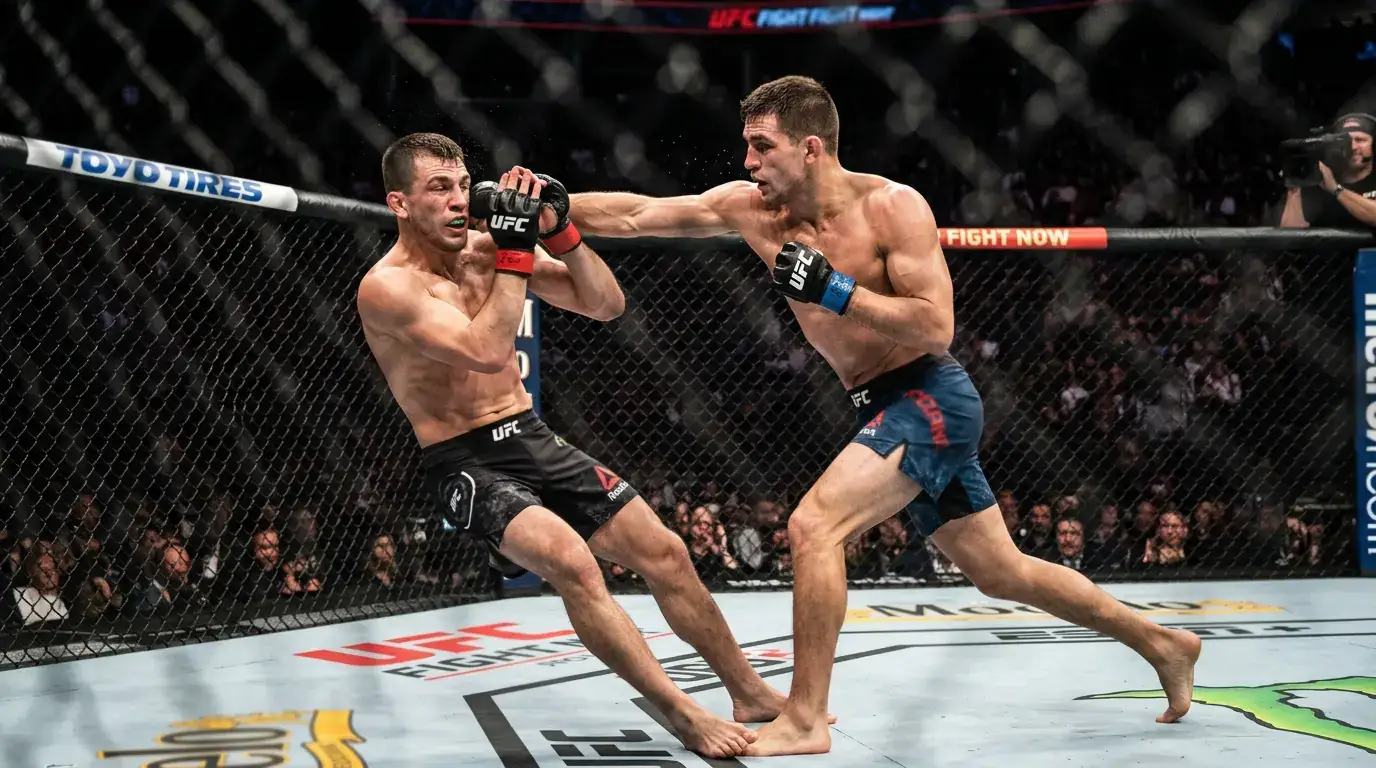
UFC Line Movement: Why the Odds Shift Before Fight Night
 Available in US
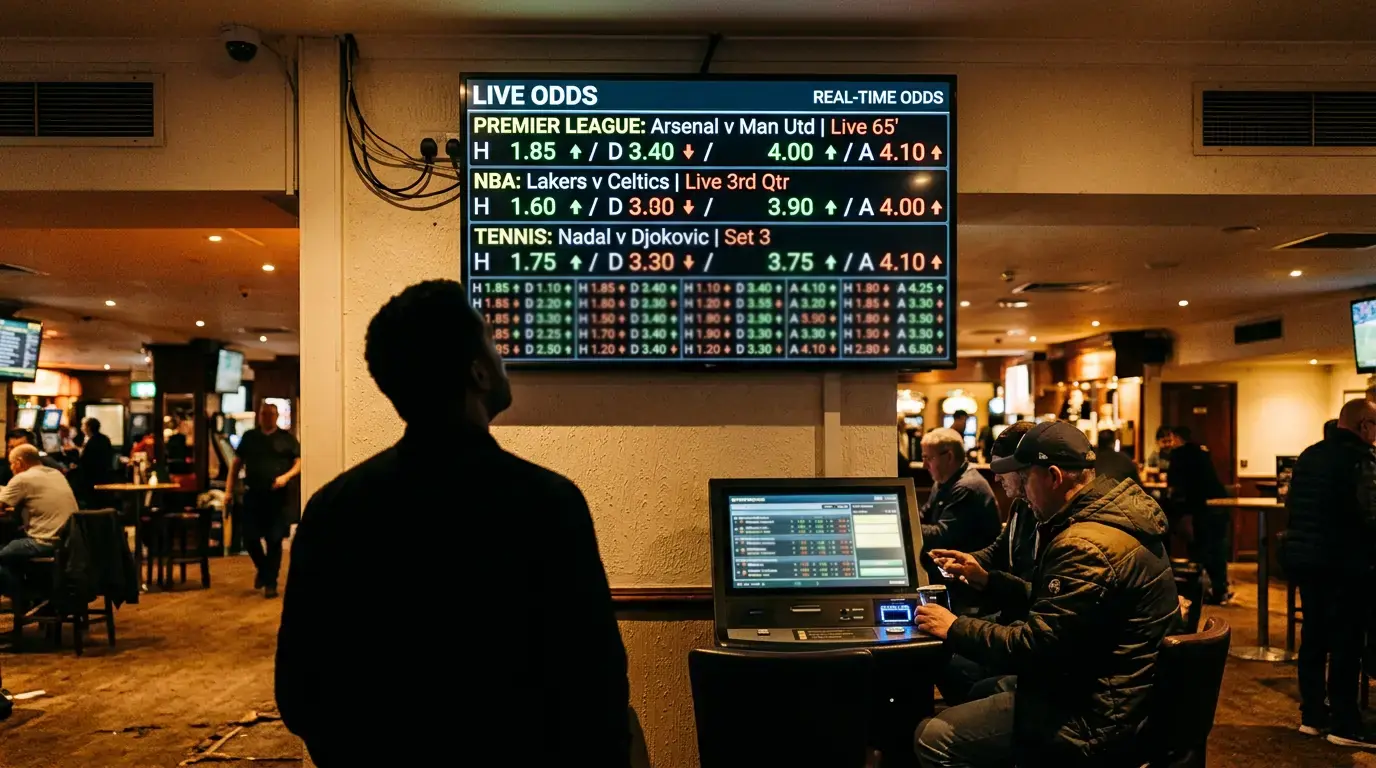
The Tuesday price and the Saturday price are almost never the same
I used to bet everything on the morning of the fight. Quick scan of the coupon, pick my corners, done. Then I started keeping a notebook of opening prices versus closing prices, and one pattern leapt off the pages: the selections I backed at the open were almost always bigger prices than the ones available at fight time. If I had just waited, I would have got worse odds. The reason, of course, was that I was betting on the underdogs the market was already drifting towards. Reading line movement is the oldest trick in the book and one of the most useful.
UFC line movement is the drift between the opening price a book posts — usually on Monday or Tuesday for a weekend card — and the closing price at the moment the market locks for the fight. The reasons behind the movement vary: injury news, weigh-in outcomes, betting volume on one side, sharp action, and occasionally something uglier. Each of those reasons produces a slightly different pattern, and learning to tell them apart is a skill that pays dividends.
What I want to walk through is why opening lines differ from closing lines, the specific drivers that move UFC markets, how to distinguish sharp money from casual volume, and when a sudden move should actually concern you rather than attract you.
Why opening lines differ from closing lines
When a UFC book posts an opening line on a fight, it is not their final view of the true probability. It is a pricing hypothesis they are testing against the flow of money over the following four or five days. The book sets the line where it thinks action will balance roughly evenly on both sides, and if the action does not balance, the book moves the line to rebalance. That is the core mechanic.
A book that opens Fighter A at 4/5 and Fighter B at 11/10 is expecting about half the stakes to come in on each side at those prices. If instead 80 per cent of stakes come in on Fighter A, the book’s exposure is one-sided and risky. They have two choices: accept the risk and hope Fighter A loses, or move the line so that Fighter A becomes less attractive (price shortens — say, to 4/6) and Fighter B becomes more attractive (price lengthens — say, to 6/4). That rebalancing is what produces most of the drift between Tuesday and Saturday.
The closing price is, in theory, the most efficient price of the week because it reflects every piece of information the market has absorbed. Sharp bettors use the concept of “closing line value” as their primary metric — if you consistently back selections at prices better than the closing price, you are beating the market long-term, regardless of whether any individual bet wins. I will say more about closing line value in a moment, but the short version is that a fighter who drifts in the market is one the sharp money has not backed; a fighter who shortens is one it has.
Injury news and weigh-in misses as the obvious drivers
The two most public triggers for UFC line movement are injuries and weigh-ins.
Injury news hits the market fast. A fighter announces on social media on Wednesday that they have been dealing with a torn meniscus. Within hours, that fighter’s price drifts because books adjust to the reduced probability of a healthy performance. If the injury is serious enough, the fighter withdraws and the fight either gets a replacement opponent (the market often reopens with new prices) or is pulled from the card entirely (bets void). If the fighter fights through it, the price settled at drift reflects the market’s adjusted view.
Weigh-in misses are less common but more dramatic. A fighter who fails to make weight has to pay a percentage of their purse to the opponent and usually enters the cage weaker than planned, either because they continued cutting past the scale or because they stopped cutting and fight heavy. Either way, the performance is compromised. The line typically moves against the fighter who missed by 10 to 20 points of implied probability, sometimes more on a bad miss.
What I watch for specifically on weigh-in Friday: not just whether the fight is “on” after the miss, but how the market prices the compromised fighter. If the fighter was 4/6 before the miss and is now even money after, the market has moved sharply but may still be underpricing the impact. If the fighter was 4/6 and is now 11/10, the market has moved even further, and the question becomes whether the move has gone too far in the other direction. Weigh-in misses often overshoot in both directions, which is where the value lives if you have read the conditioning tape.
UFC underdog win rate across 2023-2024 sat at 30 to 35 per cent on the moneyline, and a non-trivial share of those underdog wins came from fights where the favourite was compromised — often by weight cuts, sometimes by injuries that were not public knowledge. Reading weigh-in tells is one of the few edges a casual punter can systematically exploit.
Sharp money versus public money
Here is the distinction that matters. Sharp money is bets placed by disciplined punters with a proven edge — professional or semi-professional bettors whose action books actively track. Public money is everything else, the casual and recreational volume that pours into fights mostly based on name recognition and recent headlines.
Sharp money and public money often disagree, and the disagreement is visible in line movement. A classic pattern: a fight opens at 4/5 and 11/10. Public money piles in on the bigger name at 4/5 throughout the week. Normally that would push the line to 4/6 and 5/4, favouring the public choice. But instead the line moves the other way — the favourite drifts to evens and the underdog shortens to 5/6. What has happened is that a smaller but more informed amount of money has come in on the dog, and the book has moved the line to reflect the sharp view despite the public flow.
This counter-intuitive movement is the tell. When a line moves in the opposite direction to where the public money is flowing, sharp money is taking the other side. Across the biggest UK books, traders are explicitly watching for this pattern, and they respect sharp action more than volume. The book would rather be on the right side of a sharp bettor, even at the cost of going against their casual flow, than on the wrong side.
Practical rule for a casual punter: if you see a line moving against the public grain on a UFC fight, do not assume you have spotted value because you disagree. The line is moving for a reason, and the reason is usually better-informed than your instinct. Either do the work to understand why sharp money has taken that side, or leave the fight alone entirely.
Integrity-triggered line movement and when to step back
Some line movements are not driven by betting information at all. They are driven by concerning patterns that integrity monitors flag to the sportsbooks.
On UFC Vegas 110 on 1 November 2025, in the hours before the Isaac Dulgarian versus Yadier del Valle fight, Dulgarian’s price drifted from around 1.40 to 1.77 while del Valle’s shortened from 3.00 to 2.10. That kind of move — a heavy favourite drifting sharply, a heavy underdog cutting sharply — in the hours just before a fight with no public news to explain it, triggered immediate scrutiny. Caesars and William Hill subsequently refunded losing bets on the fight. The UFC’s integrity partner IC360 reviewed the pattern, and Dana White told media, “The first thing we did was call the FBI. I’ve met with the FBI twice today. If you try to do this, we will be your worst enemy.”
The lesson for the rest of us is clear. If a line moves abruptly without a visible public reason — no injury announcement, no weigh-in miss, no news — and it moves close to fight time on a lower-profile fight with unusual volume, something is off. Since 2023, UFC has partnered with IC360 to monitor wagering on every event, and the refund policy that kicked in on the Dulgarian fight is now part of how UK sportsbooks handle confirmed integrity concerns. As a punter, you want to be nowhere near those fights.
A practical rule I adopted after that weekend: if I see a line move sharply in the hours before a fight, and I cannot explain the move with public information, I do not bet the fight. Not on either side. The move is either noise, in which case I am not getting any real edge, or it is signal, in which case the signal is often something I do not want to be part of. For the wider framing on how line movement fits into reading prices, the UK odds handbook has the full picture.
Do UK UFC lines move more around the weigh-in than injury news?
Weigh-ins produce the sharpest single-day moves because the consequences are immediately visible — a fighter missed or they did not. Injury news moves the line in stages: first drift when the news breaks, then further drift if the injury is confirmed, then either withdrawal or a settled new price. Across a week, injury news often moves the line further overall, but the weigh-in Friday move is the most dramatic single event.
What is a ‘steam move’ on a UFC market?
A steam move is a rapid, sharp line movement in one direction driven by a burst of coordinated or disciplined action hitting multiple books at once. It looks like the line suddenly jumps — say, from 5/4 to 4/6 on one side in the space of an hour — rather than drifting gradually. Steam moves are usually professional action and are respected by traders even when they go against the public flow.
When should I worry that a sudden line move signals suspicious action?
When the move is abrupt, close to fight time, on a lower-profile fight with unusual volume, and there is no public news to explain it. The Dulgarian versus del Valle fight on 1 November 2025 is the textbook example — favourite drifted from around 1.40 to 1.77 in the hours before the fight with no injury or weigh-in story behind it. That pattern, on any card, is a sign to stay away rather than take either side.
Created by the ”Best Place to bet on ufc” editorial team.