UFC Betting on Mobile: Notifications, Biometrics and Push Odds
 Available in US
The first time I placed a UFC bet without looking at a screen
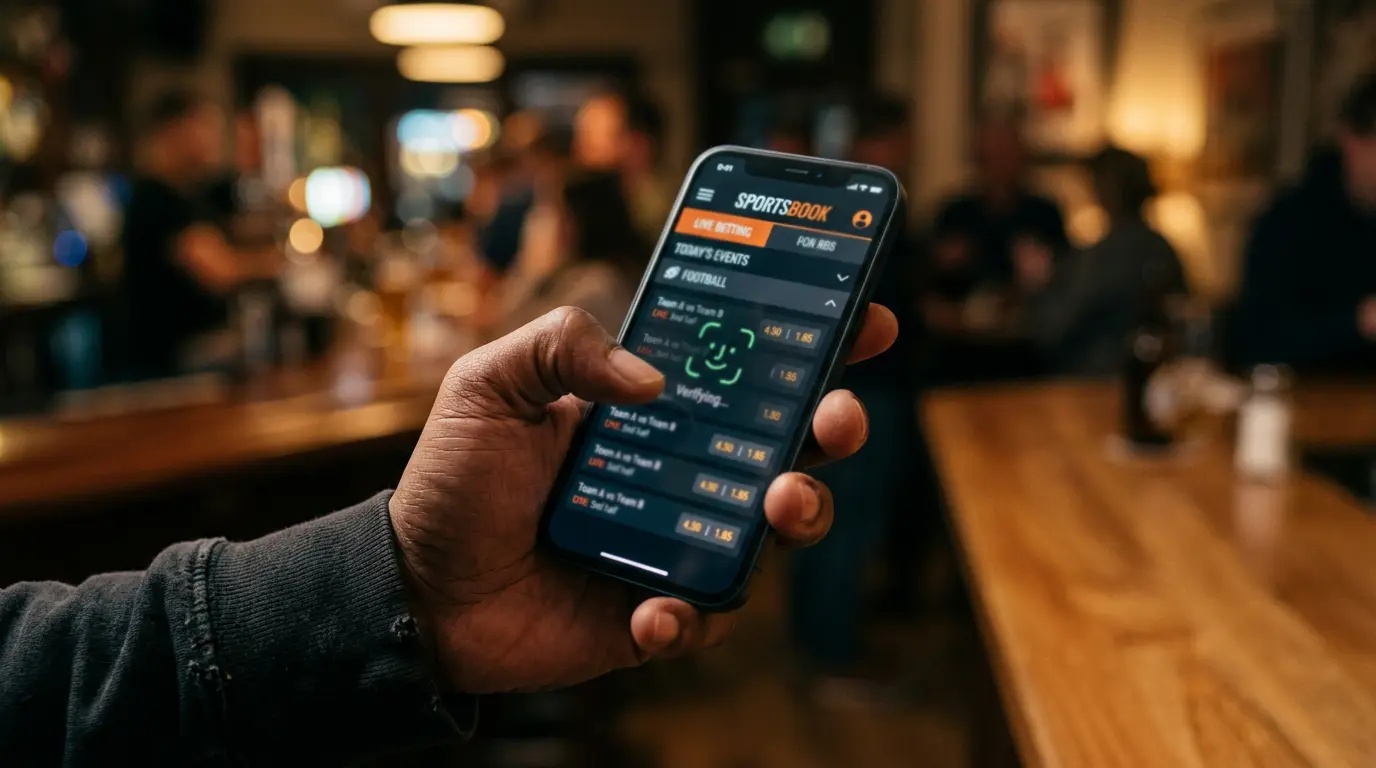
Biometric login on betting apps started out feeling a bit dystopian — Face ID approving a fight winner pick in the time it takes to tilt the phone. Then I got used to it, and now the idea of manually typing a password to place a bet feels as outdated as filling out a betting slip in pencil. The phone is where UFC betting lives in 2026, and the little details of how the app handles logins, push notifications, quick-bet functions and price changes add up to a genuinely different betting experience from the desktop coupon I grew up on.
Across UK in-play betting, 74 per cent of bets are placed from mobile devices, and the number on pre-event betting is not far behind. Betting apps are the default interface for UFC punters in 2026, not the website. What makes a good app different from a middling one is a stack of features most casual users never bother to configure.
What I want to walk through here is the mobile versus desktop split in UK UFC betting, which push notifications are genuinely worth enabling, how quick-bet and one-tap features shape the in-play experience, and the biometric security story that sits behind all of it. If you are betting UFC on your phone every weekend and have not spent twenty minutes customising the app, this is the piece to read.
Mobile versus desktop share of UK UFC action
The split is starker than most people realise. Across UK online gambling in 2024-25, monthly active accounts hit 13.5 million, and within that base, 74 per cent of in-play bets came from phones or tablets. Pre-event bets skew slightly more towards desktop but not by much — the phone is now the primary device for the majority of UFC action as well.
Among 25-34 year-olds in the UK, 52 per cent make online sports bets at least monthly, against 24 per cent of adults overall. That age group in particular has never really used desktop for betting — the phone-first experience is the default, not a substitute for a “real” desktop version. In London and Manchester, the monthly online sports betting rate climbs to 31 per cent of adults, which is the densest betting population in the country, and again the phone is where those bets get placed.
What this means practically. The books that win UK UFC punters are the ones that have invested in app UX rather than desktop elegance. Feature rollouts hit mobile first; some features never make it to the desktop experience at all. Bet Builder, for example, took years to get a fully-featured desktop interface on most books because the tap-driven construction was designed for a phone in the first place.
One flow on my own experience: I now do my pre-fight research on desktop — reading tape notes, checking stat sites, watching breakdowns — and then place the actual bet on the phone. The bigger screen wins for research, the app wins for the transactional moment. That split seems to be common among regular punters I have spoken to.
Push notifications worth enabling
Most betting apps ship with push notifications turned off by default, or with a generic “marketing” toggle that dumps every promotion notification into your lock screen. Taking twenty minutes to customise the notification settings is how you turn the app from an interruption engine into a useful real-time tool.
The notifications I actually enable for UFC. Odds-change alerts on specific bets I have placed — if the price on my pre-fight selection moves more than a threshold (usually 20 per cent), the app pings me. Useful because significant price moves often signal news I have missed. Bet settlement notifications — lets me know a bet has settled without having to refresh the app. Specific event reminders — half an hour before a fight I have action on, the app notifies me the fight is about to start.
The notifications I turn off. Generic promotion pings (“Boosted odds on tomorrow’s football!”), which are marketing. Welcome-back notifications after a period of inactivity, which are borderline predatory. “You might like this bet” personalised suggestions, which are marketing dressed as helpfulness.
A specific UFC use case: weigh-in day notifications. Some books let you subscribe to push alerts for weigh-in results on selected cards. Enable this on any card you have bet — it gets you the news of a miss in real time, which is genuinely actionable if you have a stake live. If your book does not offer weigh-in alerts specifically, fight-specific news alerts (through the events page, usually) are the nearest substitute.
Quick-bet and one-tap wagering
Quick-bet is the feature that lets you set a default stake and a default “accept price changes” toggle, then place bets with a single confirmation rather than building the slip, entering the stake and submitting. It works through a pre-configured stake (say £10) that applies to any selection you tap with quick-bet enabled.
This is a double-edged feature. Quick-bet is genuinely useful when you are watching a fight and want to back a live moneyline shift in the window where the price is available. The alternative — open the slip, type the stake, hit submit, wait for the confirmation — is slow enough that price movements catch up to you and the bet either requires a price change acceptance or disappears entirely.
The downside is that quick-bet removes the friction that stops impulse bets. A tap becomes a stake before your brain has finished thinking about whether the bet is good. I turn quick-bet on during specific fights where I have a clear live-betting plan, and off by default between fights. The friction is a feature, not a bug — it gives your thinking a beat to catch up with your fingers.
One-tap wagering is a related but distinct feature on a few books. It removes the confirmation step entirely — one tap on the selection places the bet at the current price. This is for serious live punters with disciplined stake plans. For everyone else, including me, the confirmation step is worth keeping because it is the last chance to second-guess before the stake is committed.
Stake templates are a middle ground. Save three or four preferred stakes (£5, £20, £50, £100) that you can tap rather than type. Faster than typing, slower than quick-bet, and preserves the mental checkpoint of choosing which template to use.
Face ID, fingerprint login and transaction approval
Every major UK sportsbook app supports biometric login. Face ID on iOS, fingerprint or face unlock on Android. You enrol once through the app’s settings, and thereafter opening the app uses your biometric instead of typing a password.
What biometric login actually protects. It protects your account against someone who picks up your unlocked phone and tries to open the betting app — without your face or finger, the login fails. It does not protect against anyone who has your phone unlocked, your password stored in a password manager, and access to your account recovery email. The security is meaningful but not complete.
Transaction approval is the more interesting feature. Some UK books extend biometric authentication to deposits and withdrawals — opening the deposit flow requires a second Face ID check, for example. This is a good thing from a fraud perspective. It is also a responsible-gambling safeguard because it adds friction to deposits, which reduces impulsive topping-up during a losing session. Not every book implements deposit-level biometric approval, but the books that do tend to be the ones thinking carefully about user welfare alongside user experience.
What biometric approval does not cover. Bet placement. Once you are logged in, placing bets does not usually require biometric authentication — just the confirmation step (or quick-bet, if enabled). So the biometric protects account access and money movement, but not individual stakes within a session. That is a reasonable balance for a betting app, because requiring a biometric check on every bet would make the in-play experience unusable.
App ratings on the main UK sportsbooks sit in the 4.5 to 4.8 range on iOS and 4.0 to 4.5 on Android, reflecting a broadly mature category where the major books have invested heavily in app experience. Ratings by themselves are not a reason to choose one operator over another — what matters is which features you personally use. Pick a book whose app has the push-notification granularity, the Bet Builder construction flow and the stake templates that match how you actually bet. For the wider picture on how mobile betting fits with live markets, cash-out and Bet Builder, the UK live betting hub covers the full toolkit.
Does biometric login on a UK betting app also approve my deposits?
It depends on the book. Some UK sportsbooks extend Face ID or fingerprint approval to the deposit flow — opening the deposit screen triggers a second biometric check before the transaction completes. This acts as both a fraud safeguard and a responsible-gambling friction point. Other books require biometric only at login, not at deposit. Check your specific app’s security settings to see whether deposit-level biometric approval is available and enable it if it is.
Are UFC price-change notifications really fast enough to act on?
Usually yes, though the latency depends on your app and your connection. Most UK sportsbook push notifications on significant price moves (20 per cent or more) reach your phone within 10 to 30 seconds of the move happening. That is fast enough to respond to pre-fight drift on bets you have placed, and it is especially useful for underdog positions that drift further in the hours before a fight. For in-play notifications the lag is longer because markets move faster than push delivery, so in-play alerts are more useful as a ‘check the app’ trigger than as an actionable price.
Which UFC betting app gets the highest iOS and Android ratings?
Ratings across the main UK sportsbooks sit in a narrow band — 4.5 to 4.8 on iOS and 4.0 to 4.5 on Android for the market leaders. The differences are small enough that picking an app by rating alone is not meaningful. What matters more is which features you will use: push notification granularity, Bet Builder construction flow, stake templates, quick-bet configuration and in-play market depth. Choose the app whose feature set matches how you actually bet.
Prepared by the Best Place to bet on ufc editorial staff.