Backing UFC Underdogs: When the 30% Pays
 Available in US
The season I tried to back every UFC dog and what it taught me
I once spent a six-month stretch backing every UFC underdog on every card I watched, flat-staking £20 a fight. Not because I thought I had an edge — I wanted to see, empirically, what would happen if I ran the underdog strategy at its dumbest possible version. Result: I lost money, but less than I expected to, because underdogs across that stretch won about a third of the time at prices that averaged 5/2. Close to break-even, actually, before the margin finished the job. What that exercise taught me was that backing dogs is not the edge; backing the right dogs is.
Across 2023 and 2024, UFC underdogs won roughly 30 to 35 per cent of their fights on the moneyline — different sources cite slightly different numbers, but the ballpark holds. That means a typical dog at 5/2 (implied probability 28.6 per cent) is, across the board, underpriced by a thin but real margin. Long enough that the naive strategy gets close to break-even. Not long enough to actually profit once margin eats its share.
What I want to lay out here is where the actual edge on underdog betting hides, which stylistic signals flag a dog worth backing, why emotional pricing creates specific value pockets, and how live underdog reads work once the fight is underway. The short answer is: you do not want to back every dog. You want to back the specific dogs the market has mispriced because casual money is flowing elsewhere.
The small-dog value zone
Underdog pricing in UFC falls into three rough bands. Heavy dogs priced 3/1 or longer — typically named fighters well below the favourite on tape, or unproven challengers against established champions. Medium dogs priced 7/4 to 5/2 — fighters the market thinks will probably lose but has real concerns about the favourite. Small dogs priced 11/10 to 13/8 — essentially pick’em-adjacent fights where the book has tilted the line fractionally in one direction.
The edge historically lives in the small-dog zone. Across 2023-2024, underdog win rate overall sat at 30 to 35 per cent, but within that figure the sub-band of small dogs — dogs priced 11/10 to 13/8 — won closer to 38 to 42 per cent. The reason is simple pricing geometry: small dogs are the ones the book is least confident about, which means the line has been shaded for margin more than for conviction. When the book’s view is already shaky, the overround eats more of what should be a true 45 or 48 per cent shot and pushes the implied probability down to something closer to 40 per cent.
Heavy dogs are a different story. A dog at 6/1 has implied probability around 14 per cent, and across 2023-2024 that band won roughly 10 to 15 per cent of fights — essentially matching the implied number. No edge, just the long tail of the distribution. You are not beating the market at 6/1; you are hoping to catch a variance spike.
Medium dogs sit in between. They win roughly their implied percentage plus one or two points, which is a real edge if you are selective. The selection criteria is what matters, not the band itself.
Stylistic upset signals
What separates a value dog from a lottery dog is whether the fight has a specific stylistic pattern that the market is underweighting. A few patterns recur in the UFC data.
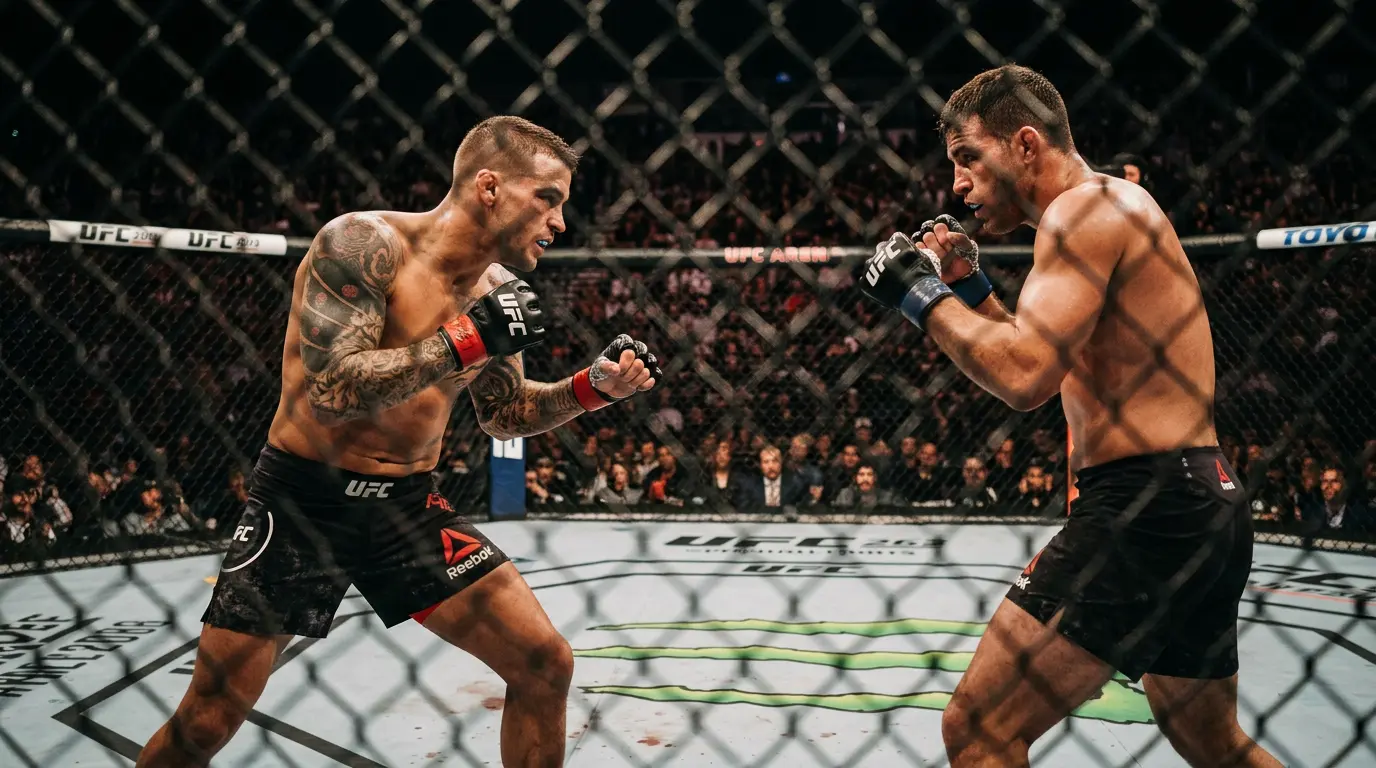
Stand-up dog against a grappling favourite with poor takedown entries. The favourite has a good name, a dominant resume built on ground wrestling, and the market prices them short because of the resume. The tape shows the favourite has struggled with entries on opponents who threaten the distance. The dog has genuine knockout power and footwork. This pattern produces the kind of upsets that headline weekends — the dog needs one clean shot in the right window, and the distance management makes it available.
Southpaw dog against orthodox favourite in a striking matchup. The stance advantage is real, especially in the first two rounds when the orthodox fighter is still adjusting. UFC underdog champions — fighters who walked in as dogs and won the belt — successfully defended those belts at roughly 63 per cent, and a non-trivial share of the original title wins came from stance-driven stylistic edges that the pre-fight pricing did not fully weight.
Younger dog against an ageing favourite coming off a long camp. Cardio and durability drop off a cliff in the late twenties and early thirties for some fighters, and the market is often slow to price this in. If the favourite is coming off three five-round fights in twelve months and the dog is fresh, the cardio advantage in rounds three through five is real and often undervalued.
What is not a stylistic upset signal. “The dog has more heart”. “The favourite has been looking flat in interviews”. “The dog’s cornerman gave a motivational quote”. These are narratives, not signals. Stylistic upsets are grounded in tape and numbers, not in vibe.
Emotional pricing and public bias
The public piles into names, not probabilities. A UFC coupon with a well-known veteran against an unranked contender will see most of the casual money flow to the veteran regardless of the underlying matchup. This public bias pushes the favourite’s price shorter than it should be and the dog’s price longer than it should be, which is the market force that produces a lot of the small-dog value band.
Three specific patterns where public bias distorts pricing. Hometown favourites — a fighter headlining a card in their home country or region gets shortened by public money beyond what the stylistic read supports. Comeback veterans — a former champion returning from layoff gets treated as if they are still at their peak, because fans remember the peak rather than the decline. Social-media heavy fighters — fighters with big promotional profiles attract casual money disproportionate to their tape, and the dogs opposite them get longer prices.
UFC favourites priced between -400 and -900 in American terms (1/4 to 1/9 in fractions) win 88 to 93 per cent of the time. The public pays a premium to back those short favourites because the near-certainty feels safe. But the margin on short favourite bets is structurally terrible — parlaying three 88 per cent favourites still only pays around even money, and if any one of the three loses, the whole ticket loses. The dog on any of those three fights is sometimes the better bet on pure expected value, even when the overall probability of winning the bet is lower. Whether you take it depends on your read on that specific fight, but “the favourite is a huge name” is not a reason to avoid the dog.
Live dog pivots after round one
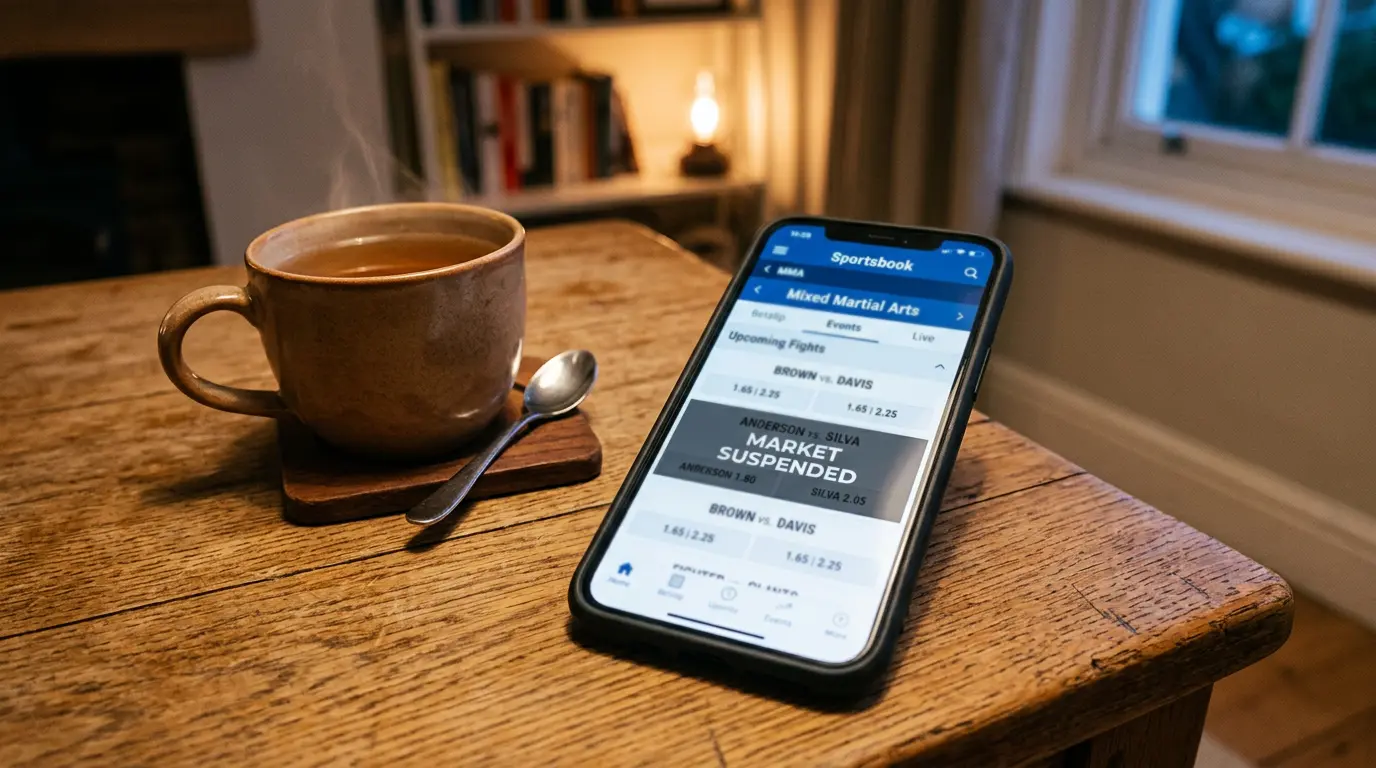
Dogs who survive round one are worth paying attention to. Once the first five minutes are over and neither fighter has been finished, the live moneyline reprices both corners based on what actually happened, and underdogs who looked credible in round one often settle at prices still worth backing.
The specific pattern. A 5/2 dog pre-fight who wins round one on the scorecards will typically see their live price shorten to even money or 5/6 going into round two. That still has value in plenty of cases — if the pre-fight price underestimated the dog, the updated live price often still does, because the market is slow to fully reprice momentum shifts. Round 2 of a three-round fight is the sweet spot for live dog pivots, because the dog has demonstrated competitiveness and still has meaningful time to win two more rounds or land a finish.
What kills a live dog bet: a round one stolen by a late flurry rather than dominance throughout. If the dog’s round one win came from one big moment in the final thirty seconds while losing the first four and a half minutes, the live repricing is probably correct and there is no further edge. You want the dog to have won the round convincingly on output, distance or ground position — evidence of pattern, not moment.
One specific scenario I watch for: a striking dog who is frustrating a wrestling favourite’s takedowns in round one. Takedown defence compounds across rounds — the favourite who misses takedowns early loses cardio attempting them, which makes subsequent entries less sharp. A dog at even money going into round two in this pattern is often still undervalued, because the TDD edge persists even though the moneyline has already moved.
How I shortlist dogs each card
My process. I go through the card and flag fights where the favourite is priced at 4/7 or shorter. Those are the fights where the dog is in the “small dog” or “lower medium dog” zone, which is where the edge historically lives. Then for each flagged fight I check: stylistic matchup tells, recent favourite form for signs of decline, and whether the public money is clearly one-sided. Fights that pass all three checks go on my shortlist. Usually I end up with two or three shortlisted dog bets across a twelve-fight card.
I do not bet every shortlisted dog. I bet the ones where my own probability estimate exceeds the implied probability by at least 5 points. That tends to leave me betting maybe one or two dogs per card at a stake size I am comfortable with. Over a year that is maybe fifty bets, not five hundred. The discipline of passing on dogs I like but cannot justify at a specific number is what separates the underdog approach from the dumb one. For the wider context on how underdog betting fits with rematches, title dynamics and bankroll rules, the UK betting strategy handbook puts it all together.
Is there a true sweet spot in UFC underdog pricing?
The small-dog band — prices around 11/10 to 13/8 — has historically produced the most consistent value in UFC. Dogs in this range won around 38 to 42 per cent of the time across 2023-2024, against implied probabilities of 37 to 48 per cent, so the gap is meaningful but modest. Heavy dogs at 6/1 or longer win roughly their implied rate — no edge, just variance. The sweet spot is close to the pick’em line, where the book has shaded for margin more than conviction.
Does public bias make short-priced favourites over-priced?
Yes, often. Public money flows disproportionately to recognisable names, hometown favourites and comeback veterans, which shortens those fighters’ prices beyond what their actual matchups support. The dog on the other side is correspondingly longer than it should be. This is a structural feature of a betting market with lots of casual volume, and it produces the specific value pockets where the underdog strategy pays — when the public is piling into one corner for non-stylistic reasons.
When is a ‘live dog’ worth a mid-fight stake?
When the dog has won round one convincingly on output, distance or ground position, not through a single late moment, and the live price still reflects the pre-fight market view more than the emerging fight. Round 2 of a three-rounder is the sweet spot — the dog has demonstrated competitiveness, there is meaningful time left, and the live market has usually not fully repriced the momentum shift. Avoid live dog bets on ’round one flurry’ patterns where the dog was losing the round until the last thirty seconds.
Published by the Best Place to bet on ufc team.