UFC In-Play Betting: Reading a Live Fight Market
 Available in US
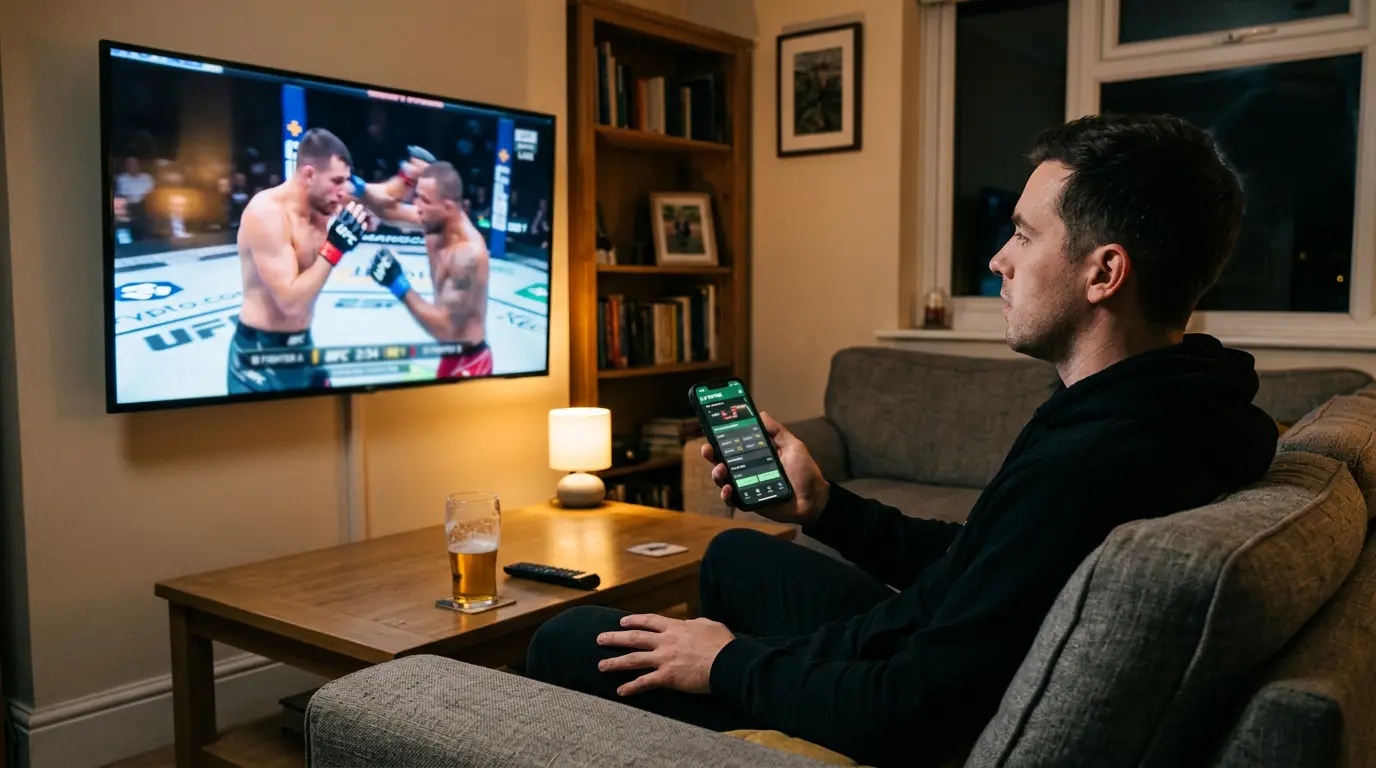
The feeling of placing a live bet between rounds for the first time
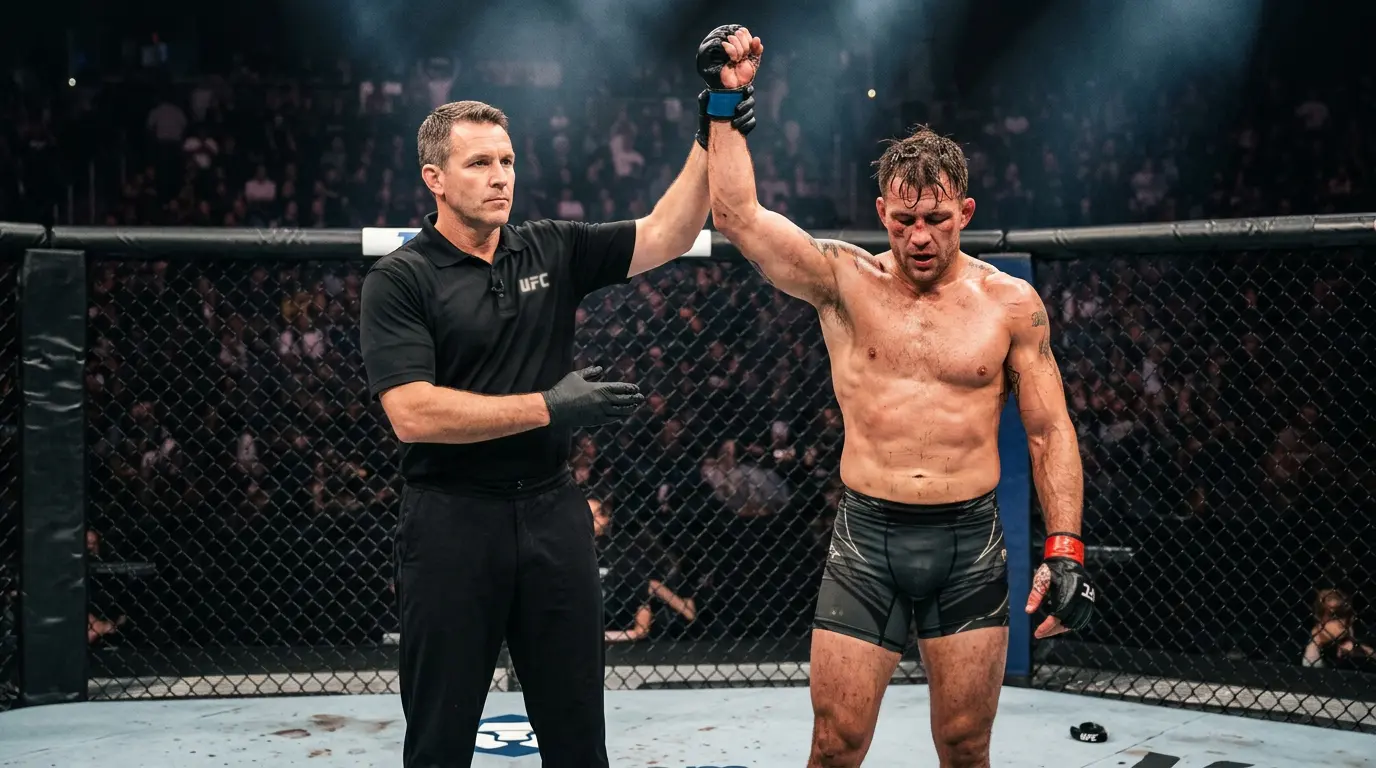
I remember the first live UFC bet I placed properly. Between rounds of a featherweight fight in 2017, the underdog had just had a huge round and the live moneyline had shortened him from 11/4 to even money. I put on a tenner at evens thinking I was chasing a hot hand. He got finished ninety seconds into the next round. Ten quid gone, twenty seconds of “oh no” in my chest, and a lesson about the speed at which live markets move and how the round-to-round narrative is not always the right read.
In-play betting on UFC is the live market — prices on the fight outcome, the finishing round, the next-round finish and various live props, all updated in real time while the fight is in progress. Across the UK, 74 per cent of in-play bets are placed from mobile phones and tablets, which tells you exactly what the experience is supposed to be: fast, on-the-fly, driven by the last thirty seconds of action on your screen.
What I want to set out here is how live moneylines actually work round to round, the logic behind the round-finish markets that open mid-fight, how to read damage and momentum without being the mug who backs every hot hand, and why UFC markets suspend at certain moments. If you have bet live and been frustrated that the slip never confirmed, this is probably your article.
Live moneyline basics
The live moneyline is the fight winner market updated continuously through the fight. It opens at the pre-fight price, moves with the action, and settles on whoever wins. The core mechanics are identical to the pre-fight market — you stake on a fighter, you collect if that fighter wins the fight — but the price you take is the price at the moment your bet is matched, not the pre-fight one.
What moves the live price: damage absorbed by each fighter, round winners, momentum shifts, and time remaining. A fighter who starts at 2/1 pre-fight and wins the first round clearly will shorten to maybe 4/5 or 10/11 by the start of round two. A fighter who started at 4/9 and gets dropped in the opening minute will drift to 5/4 or longer. The market reprices constantly.
What the price does not move much on: technical details that the casual-betting public does not weight heavily. A striker with a cut above the eye that the doctor has just waved off as non-urgent is going to lose more live price than they should, because casual punters see the blood and assume a stoppage is coming. A grappler landing takedowns that are not doing damage — the position is good, the output is not — will often shorten more than the actual threat warrants, because the broadcast commentary treats ground control as closer to a finish than it is.
Across 2024-25, the remote betting and gaming sector produced £7.8 billion in GGY for UK operators, and in-play betting is a major contributor. Understanding how the live price responds to what is visible on screen versus what actually changes the fight outcome is one of the durable edges available to a focused punter who watches closely.
Round-finish and mid-round markets
Alongside the live moneyline, most UK books offer a suite of round-specific live markets that open and close round by round.
“Fight to end in round X” — where X is the round currently in progress — updates dynamically as the round goes on. At the start of round two, “finish in round two” might be priced at 5/1. Forty seconds later, if one fighter has taken damage and is on the back foot, that price could be 2/1 and shortening. At the bell, if no finish has come, the market closes for that round and reopens for round three at a new price.
“Fight goes the distance” is the other continuously-updating live market. It starts at whatever the pre-fight price was and adjusts as the fight progresses. A three-round fight with ten minutes remaining and neither fighter hurt will see the distance price shorten noticeably — there is simply less time left for a finish to happen. A five-round fight in the early rounds will see the distance price shorten more slowly, because there are still twenty minutes of action left when round two ends.
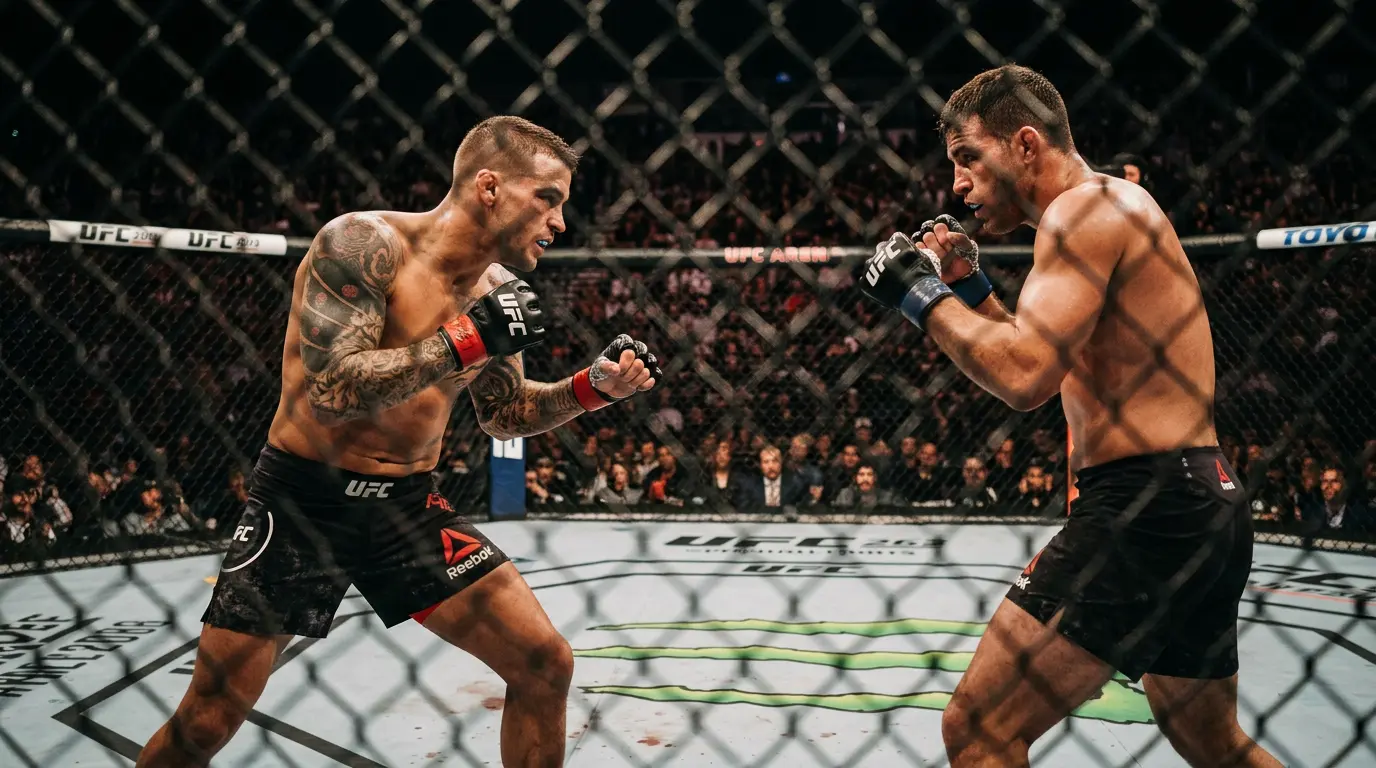
The trap on round-finish markets is the same one I fell into years ago: reacting to the last big moment on screen. A fighter who lands a clean shot and has the opponent staggered will suddenly be 2/1 to finish in that round. If you bet at that moment, you are paying a premium for a situation that may be about to stabilise — most staggered fighters in modern UFC recover within fifteen or twenty seconds, and the cornered fighter rarely gets finished in the very next exchange. The instinct is to back the hot hand. The data says the hot hand usually does not close the deal in that round, and the value on the “other fighter to survive the round” side often lives where the broadcast is telling you not to look.
Reading mid-round swings without over-reacting
Every round has at least one moment that looks like the fight is turning. Big left hand lands. A takedown slams the other fighter down hard. A sub attempt locks in for a second before slipping off. If you are betting live, each of those moments feels like the deciding action, and the live market prices them that way because the market is priced by volume — and the volume reacts to exactly what you just felt.
What I have learned to watch, in rough priority. First, accumulated damage — not the single big shot, but the pattern of shots absorbed across the round and the fight. A fighter who has been hit clean three times but is still moving well is less compromised than a fighter who has been hit clean twice but is now moving stiffly and covering up. Second, cardio signals — breathing between exchanges, shoulder rolls to reset, lower hands out of tiredness rather than confidence. Third, corner instructions between rounds when the broadcast catches them — desperate corner talk usually means the corner has seen something the price has not yet.
The general rule: the live price over-reacts to visual drama and under-reacts to slow accumulation. A fighter whose leg is being systematically kicked and is now stiffer on every pivot is usually undervalued as a finish threat at round four or round five, because no single moment on camera has made the damage obvious. A fighter who just landed one big uppercut but is otherwise losing the round on output and position is often overvalued, because the big moment dominates the broadcast even though the trend has not changed.
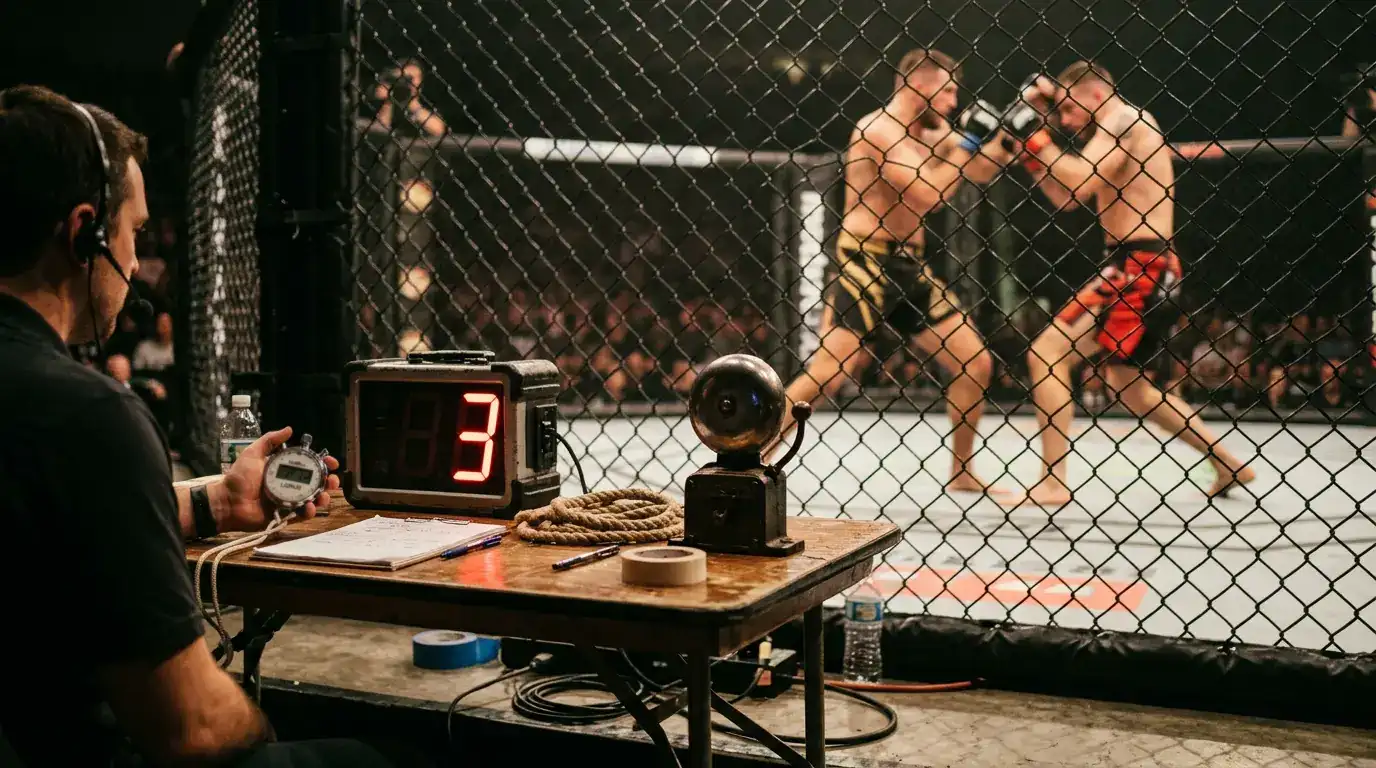
Between-round windows are where the discipline gets tested. You have sixty seconds — technically it is meant to be sixty seconds but referees sometimes stretch it slightly — to decide whether to bet the next round, let it play, or cash out any existing position. Rushing in the last five seconds before the bell is when the mistakes compound. I try to lock my next-round decision in the first thirty seconds of the break and use the remaining thirty to second-guess it.
When live markets suspend and what to do about it
Live UFC markets suspend frequently. Every time a referee issues a standing eight count that the book interprets as a possible stoppage point — markets suspend. Every time a fighter touches the mat in a way the feed cannot immediately interpret — markets suspend. Every time the video feed has a latency spike beyond the book’s tolerance — markets suspend. The pattern is defensive from the book’s side, protecting against settlement disputes if a finish occurs in the window.
UFC underdog win rate across 2023-2024 sat at 30 to 35 per cent, which is high enough that a live market during a chaotic exchange needs to be able to close fast to avoid exposure. When a scramble on the ground starts looking like a submission attempt, the book suspends the market, waits to see whether the position stabilises, and reopens once the uncertainty resolves. During the suspension, any bet you try to place will show “price changed” or “selection unavailable” and will not go through.
The frustration you feel when this happens is real. The book is protecting itself at your expense — the price you saw might have been genuine value, but you cannot get on at it. The only response is to keep trying once the market reopens, usually at a price that has moved further in the direction of the recent action. Missing a live bet because of suspension is a cost of in-play betting, not a bug you can engineer around.
What you can do: size your live stakes knowing you might miss the best window. Build a mental rule about which mid-round swings are worth chasing and which are best ignored. Accept that live betting produces more variance than pre-fight betting and size accordingly. For the wider picture on live tools, Bet Builder and cash-out, the UK live betting hub ties in-play markets to the rest of the toolkit.
How fast do UFC in-play odds refresh on UK apps?
On the main UK sportsbooks, live UFC odds typically update every second or two during active fighting, and may freeze or suspend entirely during scrambles or potential stoppage moments. Refresh speed depends on the book’s data feed and the device you are on. Mobile apps on a stable connection tend to match desktop in speed, which matters because 74 per cent of in-play bets in the UK come from phones or tablets.
Why does my live UFC bet slip ‘price changed’ so often?
Because the live market is moving faster than the time between you selecting a price and confirming the stake. Live bets on UFC require price acceptance — if the odds change between selection and confirmation, the book asks you to accept the new price rather than honouring the old one. Enable ‘accept any price change’ in your book’s settings if you want bets to go through automatically, but only if you are comfortable taking whatever price the market has moved to.
Can I place a live UFC wager during the interval between rounds?
Yes — most UK books keep live markets open between rounds, and the interval is often the calmest window to lock in a position on the next round. Prices are usually visible and stable for most of the sixty-second break, and suspensions are less common than mid-round. Just remember that the market reopens pricing for the upcoming round, so the ‘next round finish’ price you take is for that specific round only.
Written by the editors at Best Place to bet on ufc.