UFC Method of Victory Betting: KO, Submission or Decision
 Available in US
Table of Contents
- The market that turned me from casual punter to proper student
- The KO/TKO/DQ bucket and how it settles
- The submission market and why it is so often mispriced
- The decision market: the grown-up’s option
- The double chance variant and when it beats the straight pick
- How I stitch method-of-victory into the rest of the coupon
The market that turned me from casual punter to proper student
I lost my first big bet on a method-of-victory market. Had the winner right — big favourite, nailed on. But I had backed “by submission” because the dog was a notorious grappler, and my fighter just battered him on the feet for three rounds and took the decision. Tenner down, lesson in my pocket.
Method of victory is the market where you stake not just on who wins but how they win. The standard UK coupon breaks it into three routes — knockout or technical knockout (usually grouped with disqualification), submission, and decision. A few books split KO and TKO into separate selections; most do not. The prices on each route fan out from the moneyline based on finish data, stylistic matchups and, sometimes, sheer name value.
What makes this market seductive is the pricing. A fighter at 4/9 on the moneyline might be 2/1 to win by KO, 11/2 by submission and 5/4 by decision. If you have a strong read on how the fight ends, you can turn a short moneyline into a proper price. The trade-off is that you have to be right twice — the correct fighter and the correct path. Get either wrong and the stake is gone.
The KO/TKO/DQ bucket and how it settles
Most UK books lump knockout, technical knockout and disqualification into one selection. That sounds pedantic until you watch a fight end on an illegal knee and realise your KO bet just cashed on a DQ you did not see coming. Read the rules on the specific coupon you are using before you stake — a couple of smaller books split DQ into a separate long-shot option, which is almost never worth backing but occasionally moves the KO price.
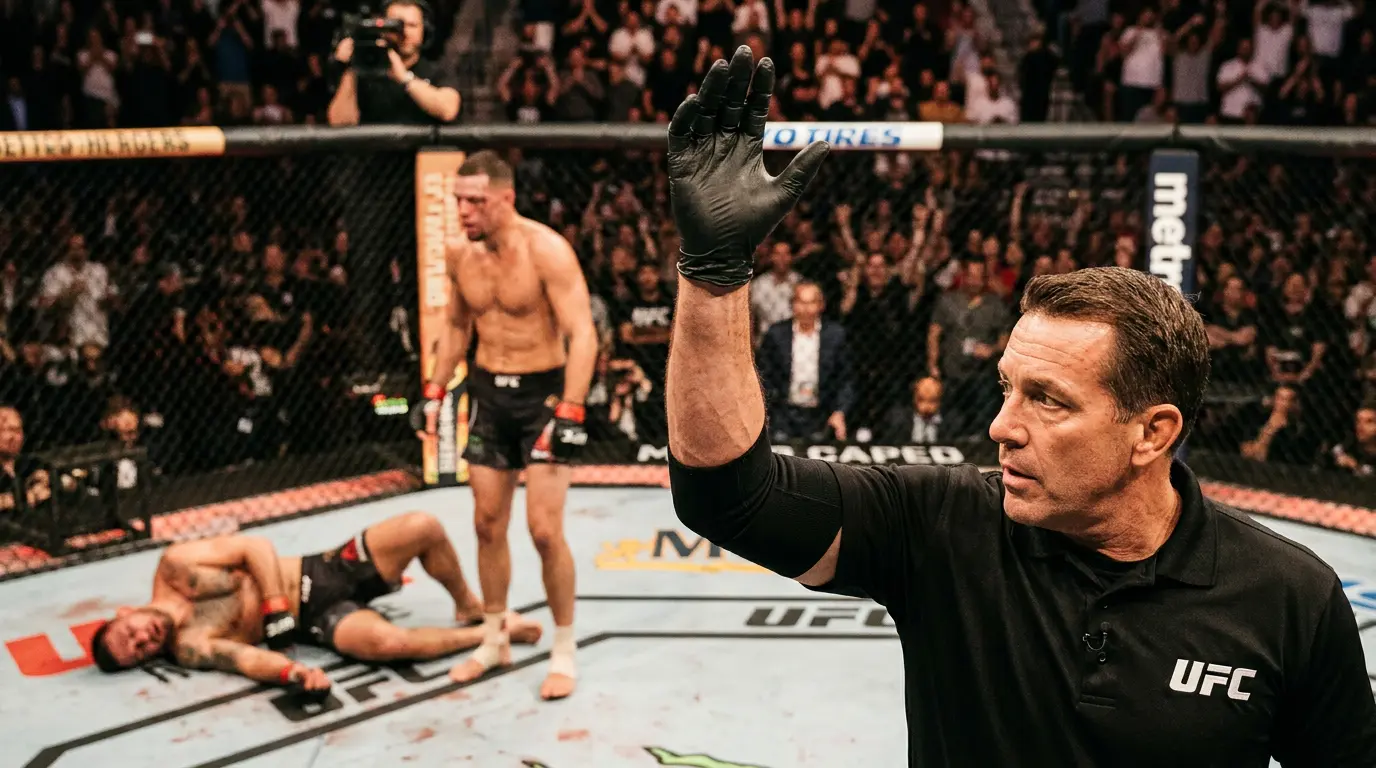
KO and TKO in MMA cover a wide range of endings. A clean knockout where the opponent is unconscious. A referee stoppage because the opponent is no longer intelligently defending — that is a TKO on the official record. A corner throwing in the towel between rounds. A doctor stopping the fight for cuts or a broken nose. All of these settle as KO/TKO on the standard UK method market.
Pricing this route is about finish rate, stylistic matchup and opponent durability. A striker with a high finish rate — someone putting 60 per cent or more of their wins in the KO column — against a grappler whose best defence is on the ground will price short on KO in any fight where the grappler cannot close the distance. The data I care about most is not finish rate in isolation but finish rate at this weight class and against this kind of opponent. A heavyweight who knocks out other heavyweights every time does not necessarily walk through a well-rounded wrestler at the same price.
One detail most casual punters miss: the referee’s early stoppages. Modern UFC has seen a string of fights waved off slightly earlier than the old guard would have called it. If you are pricing TKO probability in your head, you should be pricing in the current refereeing culture, not the culture of five years ago. Short finishes cash more often than a historical database suggests.
The submission market and why it is so often mispriced
Submission is the route that gets the most emotional pricing. A Brazilian with a black belt in jiu-jitsu gets priced short on submission purely on pedigree, even when his last six wins all came by decision. A wrestler gets priced long on submission even when he finishes fights from top position with ground-and-pound that half the time turns into a rear-naked choke once the opponent gives up the back.
What I look for on the submission market is a grappler who takes the fight to the ground consistently — takedowns landed per fifteen minutes is a useful proxy — and who actually finishes from there. Plenty of fighters rack up ground time and decision wins. Fewer turn that control into taps. The useful filter is submission attempts per fifteen minutes of ground time, which separates the real submission threats from the positional control specialists.
The other thing I care about is opponent grappling defence. A fighter with, say, 85 per cent takedown defence is a nightmare to submit because the submission threat has to win the wrestling exchange first. A fighter with 40 per cent takedown defence against a proper grappler is essentially buying the submission ticket for the opposite corner. Books are reasonably good at pricing the headline matchup and reasonably bad at pricing the sub-layer of defensive numbers, which is where the value hides.
Submission markets also carry chunkier bookmaker margin than KO or decision markets because the outcome is harder to model. That is a polite way of saying there is more noise, and in a noisy market the bad lines are bigger in both directions. On fights where I do not have a strong read on grappling dominance, I leave the submission box alone entirely.
The decision market: the grown-up’s option
If you want to bet UFC for the long run without getting hollowed out by finish variance, the decision market is where you probably want to live. Decisions are the single most common outcome in modern UFC — roughly four in ten fights finish on the scorecards, and the proportion drifts higher in title fights, flyweight and featherweight contests, and any matchup between two durable veterans.
What the decision market does not care about is how clearly one fighter wins. A 30-27 sweep and a 29-28 split are the same outcome on the coupon. That means you can back a grinding, wrestling-based favourite with a strong cardio base to win by decision at a better price than the moneyline while keeping most of the true probability. It is a value play for a specific kind of fighter — the control merchant, the high-output striker with low finish rate, the defensive boxer who outpoints opponents over fifteen or twenty-five minutes.
The risk on the decision route is the unlikely finish. Your judge-friendly favourite eats a counter in round two and suddenly the 2/1 decision ticket is worthless. To price this properly, I ask what percentage of that fighter’s last eight or ten fights went to the scorecards. If the answer is 70 per cent or higher, I am comfortable with the price even at a modest discount. If the answer is 40 per cent, I am not — the finish variance is too steep.
Split and majority decisions settle the same as unanimous ones at every UK book I have used. Draws — majority or unanimous — void the bet on a two-way decision market, refunding your stake.
The double chance variant and when it beats the straight pick
A handful of UK books now offer a method-of-victory double chance — essentially combining two of the three routes into one selection at a reduced price. The common combinations are “KO or Decision”, “KO or Submission” and “Submission or Decision”.
The obvious appeal is coverage. If you think your fighter wins but cannot decide between a late KO and a comfortable decision, double chance lets you back both in one ticket. The obvious cost is the price — double chance quotes are always shorter than either individual route on its own, and sometimes noticeably shorter than a naive 50/50 blend of the two would suggest because the book bakes in extra margin.
Where double chance starts making sense is on fighters whose paths to victory genuinely fan out across two routes. A well-rounded striker-wrestler with a 50/50 split between KOs and decisions in his last ten fights is a natural double chance candidate — you are not guessing which route because the guess is roughly a coin flip. Across UFC, underdog win rate of around 30 to 35 per cent in 2023-2024 means the moneyline itself is pricey on favourites; splitting them across a double chance can improve expected value when the prices line up. Use it as a tool, not a habit — going for the double chance every time is just paying extra for coverage you do not need on fighters with a single obvious path.
How I stitch method-of-victory into the rest of the coupon
Method of victory is the market I turn to when I have a strong read on the moneyline and want to squeeze more out of the pick without climbing into accumulator territory. It sits between the vanilla fight winner and the more speculative method-and-round combinations on the same fight. Treat the three routes as separate pricing problems — each with its own signal — rather than three ways of asking the same question, and the numbers start telling you where the book has guessed versus where it has modelled carefully. For the wider picture of how the UFC coupon fits together, the full UK markets handbook ties method of victory into the surrounding menu.
If a UFC fighter wins by DQ, does my KO/TKO bet settle?
On most UK coupons, yes — KO, TKO and DQ are grouped into a single selection. A small minority of books split DQ into its own selection, in which case a disqualification win does not settle the KO/TKO bet. Always check the market rules panel on your chosen book before placing the stake.
When does the method of victory double chance option beat the straight pick?
When a fighter has two genuinely live paths to victory. A well-rounded striker-wrestler whose last ten wins are roughly split between KOs and decisions is a clean double chance candidate — you are paying a premium for coverage, but you are also not guessing which path because the split is a coin flip. On fighters with one obvious route, the double chance is just overpaying.
Do judges’ scorecards affect how a decision market is graded?
Only in the trivial sense that a decision is a decision — split, majority and unanimous all settle the same way on a standard UK method-of-victory coupon. The margin on the scorecards does not matter. The only decision outcome that does not settle as a win is a draw (majority or unanimous), which voids the bet and refunds your stake on a two-way method market.
Prepared by the Best Place to bet on ufc editorial staff.