UFC Fractional Odds Explained for UK Punters
 Available in US
The format every British coupon defaults to, and why
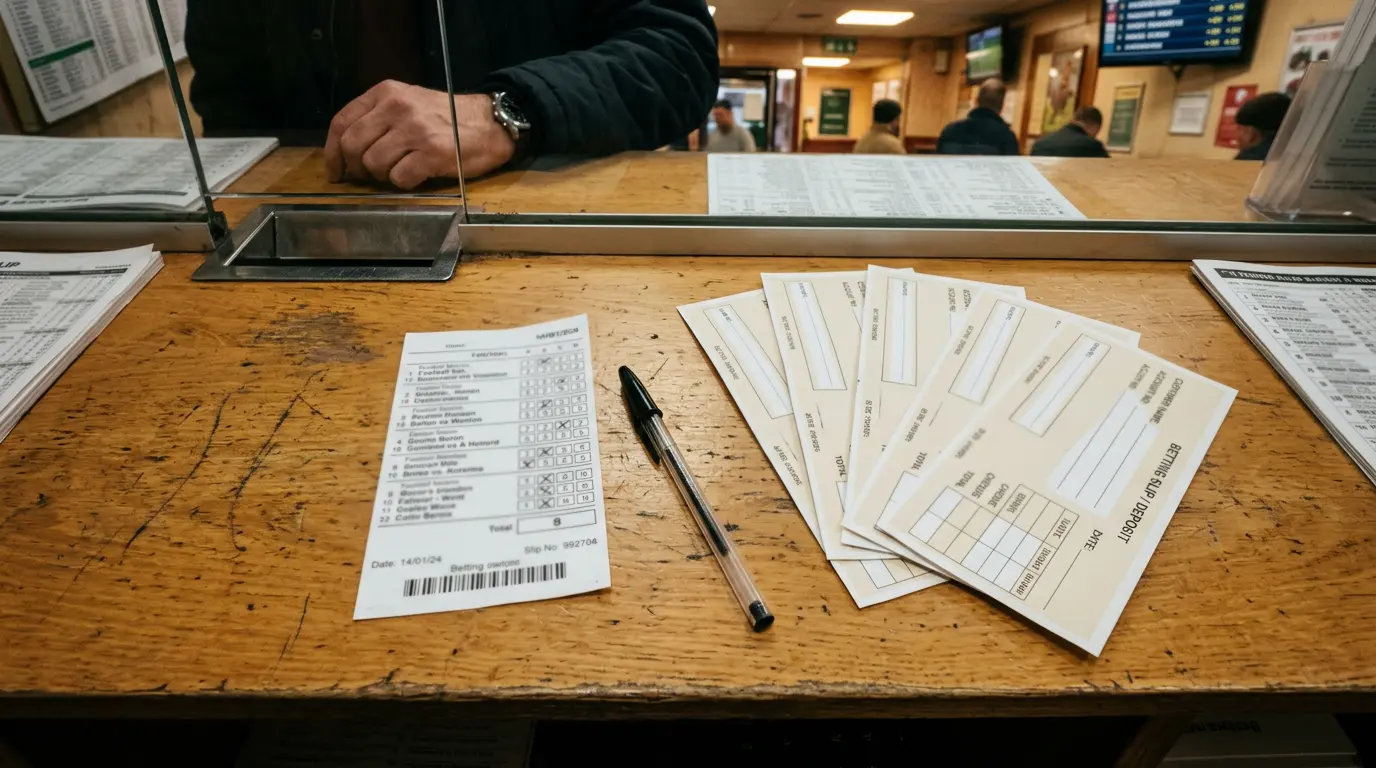
The first time I bet on a UFC fight at a high street shop in Leeds, the window clerk slid a slip across with “11/4” written in the odds column. I asked him politely whether that meant I win eleven quid from a four-quid bet or eleven quid for every quid I stake. He gave me the look you would give a tourist asking which way is up, and said “profit to stake, love, always profit to stake”. That was twelve years ago and it remains the best one-line explanation of fractional odds I have ever heard.
UK sportsbooks default to fractional pricing because fractional is what British punters grew up with. Horse racing, football, greyhounds, boxing, MMA — the traditional format across the British high street is the fraction, and the UFC coupon inherits the same convention. Even when the same book operates in Europe with decimal defaults and in the US with American odds, the UK-facing version opens in fractions unless you change the setting.
What I want to lay out here is how to read fractions without reaching for a calculator, what “evens” actually means, how odds-on and odds-against differ, how to work out your return on any stake in under ten seconds, and the small quirks of denominator rounding that cost money on larger stakes.
How fractions work on a UFC coupon
The formula is simple. A fractional price is written as top-over-bottom — for example 5/2, 11/4, 4/5. The top number is profit. The bottom number is stake. So a fighter at 5/2 gives you five units of profit for every two units you stake. Stake two, win five, get seven back in total (profit plus stake).
Work through a few. 3/1 — risk one, profit three, collect four. 2/1 — risk one, profit two, collect three. 1/2 — risk two, profit one, collect three. 1/4 — risk four, profit one, collect five. 4/5 — risk five, profit four, collect nine.
Translating a fraction to a decimal in your head takes one step. Divide the top by the bottom and add one. 5/2 becomes 2.5 plus 1 = 3.5. 4/5 becomes 0.8 plus 1 = 1.8. 11/4 becomes 2.75 plus 1 = 3.75. That decimal is what the same price would show on Betfair Exchange or on a European book, and it is also the multiplier on your total return including the stake. So £10 at 11/4 returns £10 x 3.75 = £37.50, which is £27.50 profit.
Translating to implied probability takes one more step. Flip the fraction and add the top to the bottom. 5/2 becomes 2 over (2 + 5) = 2/7 = 28.6 per cent. 4/5 becomes 5 over (5 + 4) = 5/9 = 55.6 per cent. UFC underdog win rate sat at roughly 30 to 35 per cent across 2023-2024, which means a fighter priced at 5/2 with 28.6 per cent implied probability sits right at the low end of that range — not automatically value, but worth a closer look before you dismiss it.
Evens and the pick’em zone
“Evens” on a UK coupon is the shorthand for 1/1. Stake one, profit one, collect two. The same price in decimal is 2.00. Some books write it as “Evs”, “EV” or “Evens”; they all mean the same thing. The implied probability of evens is exactly 50 per cent before any bookmaker margin is applied, which is why pure pick’em fights rarely actually sit at evens — the book shaves a couple of points off to build its overround, so you see 10/11 each way (each side at about 52 per cent implied, totalling around 104 per cent with the margin).
Around evens is the zone where UFC pick’em fights live. Typical coupons show 10/11 and 10/11 on a true coin-flip matchup, or 5/6 and 10/11 if the book wants to tilt one side marginally. 10/11 as a decimal is 1 + 10/11 = 1.909 — you stake 11 units to win 10, so a £22 bet returns £42 (£20 profit).
Where evens crops up specifically is on “fight to go the distance” lines in fairly-matched three-round fights, totals lines priced at the central number, and some method-of-victory selections on fighters with split finish distributions. When you see a bet priced right at evens, it is a clean 50/50 in the book’s eyes before juice. Whether it is a clean 50/50 in your eyes is a different question, and one worth asking.
Odds-on versus odds-against and what each tells you
“Odds-on” means the top of the fraction is smaller than the bottom — 4/5, 4/6, 1/2, 1/4, 1/9. The fighter is favoured, and you are risking more than you stand to profit. “Odds-against” means the top is bigger than the bottom — 6/4, 5/2, 11/4, 4/1, 10/1. The fighter is an underdog, and the profit exceeds the stake.
The break point between the two concepts is evens, 1/1. Anything above evens (larger right-side number) is odds-on, anything below is odds-against. The terminology is useful shorthand — when a trader says a fighter is “odds-on to win by KO”, they mean the KO selection is priced at more than 50 per cent implied, which changes how you should think about staking and stacking with other selections.
A practical note. Odds-on selections pay slowly and bankroll-heavily. A 1/4 shot winning six times in a row pays about 2.4x your starting stake if you parlay it, which sounds like more than it feels. Odds-against selections pay fast and blow up harder. A 5/2 dog hitting twice in a row pays 11.25x your original, which feels life-changing but will happen about 8 per cent of the time even if both dogs are genuinely 30 per cent shots. Knowing which side of evens you are on changes how you size the stake and how you build accumulators.
A worked example with a proper stake
Let me run through a live scenario. A UFC Fight Night main event — three-round non-title bout. The moneyline on the UK coupon opens as follows: Fighter A at 4/9, Fighter B at 2/1. You want to stake £50 on Fighter B.
Step one — read the fraction. 2/1 means for every one unit staked, you profit two. Step two — work out the profit. £50 stake times 2 (the top) divided by 1 (the bottom) = £100 profit. Step three — add the stake back for total return. £100 profit plus £50 stake = £150 total return if Fighter B wins. If Fighter B loses, you lose the £50 stake. If the fight is a draw on a two-way market, the bet voids and you get the £50 back.
Now the same exercise with a less clean fraction. Fighter A is priced 8/13 on a different book. You fancy Fighter A and want to put £100 on. 8/13 means for every 13 units staked, you profit 8. £100 times 8 divided by 13 = £61.54 profit (rounded to the nearest penny). Total return is £161.54. The calculation is messier only because the fraction does not reduce to clean pennies on a round-number stake.
Under HMRC guidance, UFC winnings are tax-free for UK punters — no self-assessment, no declaration, no percentage off the top. The £100 profit in the first example is yours in full when it lands in your account. The operator pays point-of-consumption duty to the Treasury; you pay nothing on the winnings themselves. UK gambling winnings have been tax-free at the punter level for years and the status has held through every regulatory review.
One more thing on denominators. Some UK books price the same underlying probability as 4/6 and others as 8/13. In decimal those are 1.667 and 1.615 respectively — not identical. The 4/6 pays fractionally more on a clean stake. Checking the fraction across two or three books before you stake is how line-shopping actually works in practice, and on a £500 stake the difference can be four or five pounds without either price looking obviously better at a glance. If you want the broader framework on reading odds, the UK odds explainer ties fractions in with decimal and implied probability in one place.
What does ‘evens’ mean in a UFC fight market?
Evens is the UK shorthand for 1/1 pricing — stake one, profit one, collect two. The decimal equivalent is 2.00 and the implied probability is exactly 50 per cent before any bookmaker margin is applied. In practice you see prices like 10/11 on pick’em fights because the book shaves a couple of points off evens to build its overround, so a true pure-evens UFC selection is rare on the coupon.
How do I convert 11/4 into a decimal figure quickly?
Divide the top by the bottom and add one. 11 divided by 4 is 2.75, plus 1 is 3.75. That decimal is also the multiplier on your total return — a £20 stake at 11/4 returns £20 times 3.75 which is £75, giving you £55 profit. The trick works for any fraction: 5/2 becomes 3.5, 4/5 becomes 1.8, 7/2 becomes 4.5.
Why does one UK book price a fighter at 4/6 while another lists 8/13?
Because fractional rounding varies slightly between books. 4/6 in decimal is 1.667. 8/13 in decimal is 1.615. They look similar but they are not identical — 4/6 pays fractionally more on the same stake. Line-shopping across two or three UK books on the same fighter is how you catch these small discrepancies, and over hundreds of bets the difference compounds into a non-trivial edge.
Published by the Best Place to bet on ufc team.